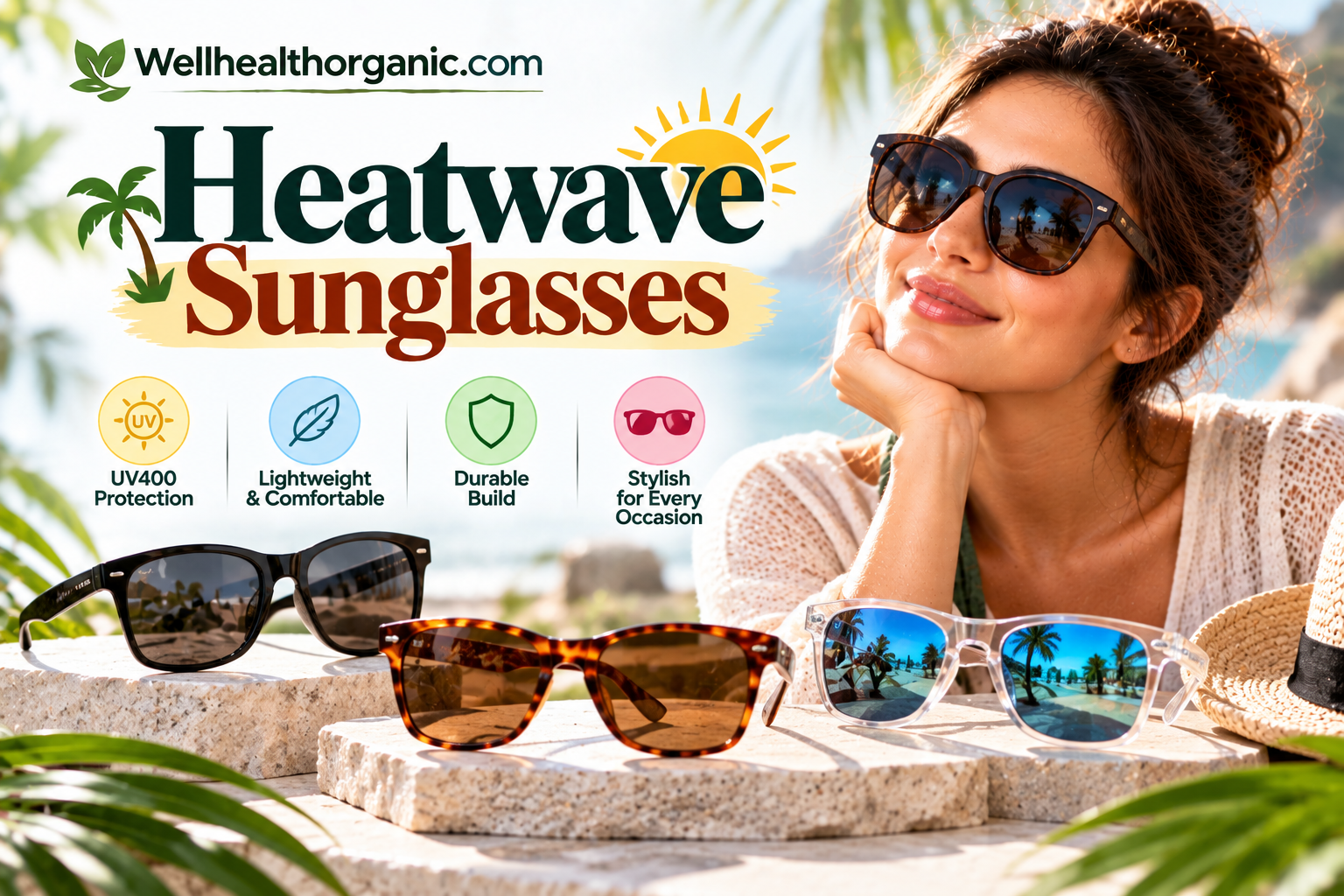
When spending time outdoors in bright summer sunlight, protecting your eyes is just as important as protecting your skin. A good pair of sunglasses can reduce uncomfortable brightness and, most importantly, help protect your eyes from ultraviolet (UV) radiation.
Heat Wave sunglasses may refer specifically to eyewear from the Heat Wave Visual brand, while the term is also sometimes used more generally when searching for sunglasses suitable for hot and sunny weather.
Regardless of the brand or style you choose, important factors include UV protection, lens quality, fit, coverage, durability, and whether specialized features such as polarization are appropriate for your activities.
In this guide, we’ll explain Heat Wave sunglasses, UV protection, polarized lenses, frame styles, lens colors, prescription options, maintenance tips, and what to look for when buying sunglasses for outdoor use.
What Are Heat Wave Sunglasses?
Heat Wave Visual is an eyewear brand known for sunglasses, performance eyewear, safety-oriented styles, and distinctive frame designs.
If you’re shopping specifically for Heat Wave Visual sunglasses, features vary between models. Some may be available with polarized lenses, prescription options, safety-rated configurations, or different lens technologies.
For this reason, you should check the specifications of the individual model rather than assuming every pair has the same features.
Do Sunglasses Protect Your Eyes From Heat?
Sunglasses are primarily designed to protect your eyes from bright visible light and harmful UV radiation rather than directly protecting them from high air temperatures.
During a heatwave, strong sunlight and UV exposure can occur alongside high temperatures, which is why sunglasses remain important outdoors.
For additional protection during very sunny conditions, consider combining sunglasses with a wide-brimmed hat and spending time in the shade when appropriate.
Why UV Protection Matters
Ultraviolet radiation from the sun can affect the eyes as well as the skin.
Long-term UV exposure is associated with several eye conditions, while intense short-term exposure can contribute to photokeratitis, sometimes described as a sunburn of the eye.
When choosing sunglasses, look for lenses that provide strong UVA and UVB protection. Labels such as 100% UV protection or UV400 are commonly used to indicate broad UV protection.
Important Features to Look for in Heat Wave Sunglasses
100% UV Protection
UV protection should be one of your highest priorities when selecting sunglasses.
Dark lenses alone do not necessarily provide adequate UV protection. Lens darkness and UV filtration are different properties.
For this reason, choose sunglasses from a reputable source and check their UV protection specifications.
Polarized Lenses
Polarized lenses are designed to reduce certain types of reflected glare, particularly glare coming from relatively flat surfaces such as water, roads, and snow.
This can make polarized sunglasses particularly useful for activities such as:
- Driving
- Fishing
- Boating
- Beach activities
- General outdoor recreation
However, polarization and UV protection are not the same thing. A polarized lens should still provide appropriate UV protection.
Also remember that not every Heat Wave sunglasses model or lens option is necessarily polarized. Check the specifications before purchasing.
Good Coverage
Sunglasses that provide greater coverage can help reduce the amount of sunlight reaching your eyes from above and around the sides of the frame.
Large lenses and wraparound designs can be particularly useful for outdoor sports and prolonged sun exposure.
Comfortable Fit
A good pair of sunglasses should fit securely without creating uncomfortable pressure around your nose, temples, or ears.
Sunglasses that constantly slide down your nose or feel excessively tight may become uncomfortable during extended use.
Durable Frame Materials
Frame materials differ between models and manufacturers. Durability, flexibility, weight, and temperature tolerance can vary considerably.
If you plan to use sunglasses for sports, outdoor work, or demanding environments, consider models designed specifically for those activities.
Impact-Resistant Lenses
Polycarbonate lenses are commonly used in sports and safety eyewear because they are lightweight and offer good impact resistance.
However, ordinary sunglasses should not automatically be treated as safety glasses.
If you need eye protection for construction, industrial work, shooting sports, or another activity involving impact hazards, choose eyewear that meets the appropriate safety standard for that activity.
Heat Wave Sunglasses Lens Options
Lens options vary depending on the specific sunglasses model. Understanding common lens features can help you choose a pair suited to your activities.
Standard Tinted Lenses
Tinted lenses reduce visible brightness and can make outdoor conditions more comfortable.
Different tint colors can influence contrast and color perception.
Polarized Lenses
Polarization helps reduce reflected glare and may improve visual comfort in environments where glare is significant.
Polarized lenses can be especially useful around water and while driving during bright daytime conditions.
Mirrored Lenses
Mirrored lenses have a reflective coating on the outside of the lens. In addition to changing the appearance of the sunglasses, the coating can reduce some of the visible light reaching the eyes.
UV protection should still be verified separately rather than assumed from the mirrored appearance.
Prescription Lenses
Some sunglasses can be configured with prescription lenses, allowing people who need vision correction to combine their prescription with sun protection.
Availability depends on the frame, prescription, lens type, and manufacturer.
How to Choose the Best Lens Color
Lens color affects visible light transmission, contrast, and color perception. It does not by itself determine the amount of UV protection provided.
Gray Lenses
Gray lenses reduce overall brightness while generally maintaining relatively natural color perception. They can be useful for everyday outdoor wear.
Brown or Amber Lenses
Brown and amber lenses may increase contrast in certain environments and are popular for activities such as hiking, driving, and some outdoor sports.
Yellow Lenses
Yellow lenses can increase perceived contrast in some lower-light environments but are generally not ideal for extremely bright sunlight unless they provide an appropriate level of visible light reduction.
Green Lenses
Green lenses can provide good contrast while maintaining relatively balanced color perception, depending on the specific tint.
Mirrored Lenses
Mirrored coatings can be useful in bright environments and are also chosen for their appearance.
Whatever color you choose, verify that the lenses provide appropriate UV protection.
Are Darker Sunglasses Better?
Not necessarily.
A darker lens reduces visible light, but it does not automatically provide better protection from ultraviolet radiation.
UV protection depends on the lens material and UV-filtering properties rather than simply how dark the lens appears.
When comparing sunglasses, prioritize verified UV protection over lens darkness alone.
Benefits of Wearing Quality Sunglasses
Protection From UV Radiation
One of the most important benefits of quality sunglasses is reducing your eyes’ exposure to ultraviolet radiation.
Regular UV protection is particularly important for people who spend substantial amounts of time outdoors.
Reduced Glare
Bright reflected light can make it difficult to see comfortably.
Polarized lenses can significantly reduce certain types of reflected glare, which may improve visual comfort during driving, fishing, boating, and other outdoor activities.
Greater Comfort in Bright Conditions
Sunglasses reduce the amount of visible light reaching the eyes, making bright outdoor environments more comfortable.
This can help reduce squinting and discomfort caused by intense sunlight.
Protection From Wind and Debris
Frames with good coverage may provide some physical protection from wind, dust, and airborne debris during ordinary outdoor activities.
However, regular sunglasses are not substitutes for certified protective eyewear when there is a significant impact or occupational hazard.
Are Polarized Sunglasses Better?
Polarized sunglasses are not automatically better for every situation, but they can provide substantial benefits when reflected glare is a problem.
They can be especially useful for:
- Driving during daylight
- Fishing
- Boating
- Beach activities
- Outdoor recreation near water
One potential drawback is that polarized lenses can sometimes make certain LCD or digital displays appear darker or difficult to read from particular angles.
Choose polarization based on your activities rather than assuming it is necessary for everyone.
How to Choose the Right Heat Wave Sunglasses
Consider How You Will Use Them
Start by considering your primary activity.
Everyday casual sunglasses may have different requirements from sunglasses intended for fishing, sports, driving, or occupational use.
Check UV Protection
Look for clear information indicating broad UVA and UVB protection, such as 100% UV protection or an appropriate UV400 designation.
Decide Whether You Need Polarization
If reflected glare is a frequent problem, polarized lenses may be useful.
If polarization is important to you, confirm that the specific lens option you’re purchasing is polarized.
Choose the Right Fit
Consider:
- Frame width
- Lens size
- Bridge fit
- Temple length
- Overall coverage
A secure, comfortable fit is especially important if you’ll wear the sunglasses for several hours.
Consider Your Face Shape
Style is a personal preference, but different frame shapes can create different appearances on different face shapes.
Try several designs when possible and prioritize comfort and coverage alongside appearance.
Check Lens Material
Common sunglass lens materials include polycarbonate and other plastics. Each material can differ in weight, optical characteristics, scratch resistance, and impact resistance.
Choose a lens suited to how you intend to use the sunglasses.
Heat Wave Sunglasses for Driving
Sunglasses can improve comfort while driving in bright daytime conditions.
Polarized lenses may be particularly useful because they can reduce reflected glare from roads, vehicles, and other surfaces.
However, sunglasses should not make your surroundings excessively dark, and they should not interfere with your ability to read dashboard displays.
Very dark sunglasses may be unsuitable for low-light conditions and should not be used for night driving.
Heat Wave Sunglasses for Fishing and Water Activities
Water can produce substantial reflected glare, making polarized sunglasses particularly popular for fishing and boating.
Polarized lenses can reduce surface glare and improve visual comfort around water.
For extended outdoor exposure, consider frames with good coverage and a secure fit.
A retention strap may also be useful during boating or other activities where sunglasses could easily fall into the water.
Heat Wave Sunglasses for Outdoor Sports
If you’re purchasing sunglasses for running, cycling, hiking, or another outdoor activity, consider factors such as:
- Secure fit
- Low weight
- Good coverage
- Ventilation
- Impact resistance
- Lens tint
- UV protection
For activities involving a significant risk of impact, use eyewear designed and appropriately rated for that specific activity.
Heat Wave Sunglasses and Safety Ratings
Some eyewear may be marketed for safety or occupational use, but not every pair of sunglasses meets safety-eyewear requirements.
If you require safety glasses, check the exact model for the applicable certification or standard rather than assuming that the entire brand or product line is safety-rated.
Safety requirements can vary depending on the activity and country.
Can You Get Prescription Heat Wave Sunglasses?
Prescription options may be available for certain sunglass frames and lens configurations.
If you normally wear prescription glasses, options may include:
- Prescription sunglasses
- Prescription-compatible frames
- Fit-over sunglasses
- Clip-on sun lenses
- Photochromic prescription lenses
The best option depends on your prescription, intended activity, frame compatibility, and preferences.
An optician or eye-care professional can help determine which options are appropriate for your prescription.
Can You Wear Sunglasses Over Prescription Glasses?
Yes, but you need sunglasses specifically designed to fit over prescription eyewear.
These are often described as fit-over or OTG (over-the-glasses) sunglasses.
Standard sunglasses may not fit securely or comfortably over prescription frames.
How to Clean Heat Wave Sunglasses
Proper cleaning helps protect the lenses and maintain clear vision.
For routine cleaning:
- Remove loose dust or debris before rubbing the lenses.
- Use clean water and an appropriate lens-cleaning method when necessary.
- Dry or wipe the lenses with a clean microfiber cloth.
- Avoid using dirty clothing, paper towels, or abrasive materials on the lenses.
Follow the manufacturer’s instructions if the lenses have specialized coatings.
How to Store Your Sunglasses
Store sunglasses in a protective case when you’re not wearing them.
This can help prevent:
- Scratches
- Crushed or bent frames
- Damage to lens coatings
- Accumulation of dirt and debris
Avoid placing sunglasses lens-side down on hard or rough surfaces.
Should You Leave Sunglasses in a Hot Car?
It is generally better not to leave sunglasses exposed to extreme temperatures for extended periods.
The interior of a parked vehicle can become extremely hot. Depending on the frame, lens material, adhesives, and coatings, repeated exposure to excessive heat may contribute to warping or deterioration.
Store your sunglasses in a protective case in a cooler location whenever practical.
How Long Do Sunglasses Last?
There is no universal lifespan for sunglasses.
How long a pair lasts depends on:
- Build quality
- Frequency of use
- Storage
- Cleaning practices
- Exposure to heat and chemicals
- Scratches or physical damage
Replace or professionally evaluate sunglasses if the lenses become badly scratched, the frame no longer fits properly, or damage interferes with safe and comfortable vision.
Sunglasses for Children
Children also benefit from appropriate UV protection when spending time outdoors.
When selecting children’s sunglasses, look for:
- Reliable UV protection
- A comfortable fit
- Durable construction
- Appropriate lens and frame size
A hat and shade can provide additional protection during intense sunlight.
Common Sunglasses Buying Mistakes
When buying sunglasses, avoid relying solely on appearance or lens darkness.
Common mistakes include:
- Assuming dark lenses automatically provide UV protection
- Assuming every polarized lens provides adequate UV protection
- Buying frames that do not fit securely
- Choosing insufficient coverage for prolonged outdoor exposure
- Assuming ordinary sunglasses are certified safety glasses
- Ignoring the intended activity when choosing lens color
- Buying sunglasses without checking product specifications
How to Protect Your Eyes During a Heatwave
Sunglasses are useful during hot, sunny weather, but eye protection should be part of a broader approach to sun and heat safety.
Consider:
- Wearing sunglasses with strong UV protection
- Using a wide-brimmed hat
- Seeking shade during intense sunlight
- Staying adequately hydrated
- Avoiding unnecessary prolonged exposure to extreme heat
Remember that UV radiation can still reach your eyes when the weather does not feel extremely hot, so sunglasses are useful beyond heatwave conditions.
Are Heat Wave Sunglasses Worth It?
Whether a particular pair of Heat Wave sunglasses is right for you depends on your budget, preferred design, fit, lens requirements, and intended activities.
Instead of choosing sunglasses based only on the brand name, compare individual models according to:
- UV protection
- Lens type
- Polarization
- Frame fit
- Coverage
- Durability
- Prescription compatibility
- Safety rating when required
- Price
The best sunglasses are the ones that provide the protection and features you need while fitting comfortably enough that you’ll actually wear them.
Conclusion
Heat Wave sunglasses can provide stylish and practical eye protection for outdoor activities, but the exact features depend on the model and lens configuration you choose.
The most important feature of any pair of sunglasses is reliable protection against ultraviolet radiation. Polarization can provide additional benefits by reducing reflected glare, particularly when driving, fishing, boating, or spending time near water.
When shopping for sunglasses, consider UV protection, fit, coverage, lens material, polarization, tint, durability, and your intended activity rather than choosing a pair based solely on appearance.
Proper cleaning and storage can also help protect your investment and keep your lenses clear and comfortable for longer.
Frequently Asked Questions About Heat Wave Sunglasses
What are Heat Wave sunglasses?
Heat Wave sunglasses can refer to sunglasses sold by the Heat Wave Visual eyewear brand. The phrase may also be used more generally when searching for sunglasses suitable for hot and sunny outdoor conditions.
Do Heat Wave sunglasses provide UV protection?
UV protection depends on the specific lens and model. Check the current product specifications and look for broad UVA and UVB protection rather than assuming every model has identical features.
Are all Heat Wave sunglasses polarized?
No. Polarization is a specific lens feature and should not be assumed for every pair. Check whether the exact model and lens configuration you’re considering is labeled polarized.
What is the difference between polarized and UV-protective sunglasses?
UV protection reduces exposure to ultraviolet radiation, while polarization reduces certain types of reflected visible-light glare. These are separate features, although sunglasses can provide both.
Are polarized sunglasses better for driving?
Polarized sunglasses can be helpful for daytime driving because they reduce reflected glare from roads and other surfaces. However, they can sometimes affect the visibility of certain digital displays.
Are Heat Wave sunglasses good for fishing?
A Heat Wave model with suitable UV protection, polarization, coverage, and fit may be useful for fishing. Polarized lenses are particularly popular around water because they reduce reflected surface glare.
Can I get prescription Heat Wave sunglasses?
Prescription compatibility depends on the particular frame and available lens options. Check the specifications of the model you’re considering or consult an optician.
Can I wear Heat Wave sunglasses over prescription glasses?
Standard sunglasses may not fit comfortably over prescription glasses. If you need to wear both, look for a suitable fit-over or OTG design, or consider prescription sunglasses.
Are Heat Wave sunglasses safety glasses?
Only models specifically tested and marked for an applicable safety standard should be treated as safety eyewear. Do not assume every pair of sunglasses from a brand provides occupational impact protection.
What does UV400 mean?
UV400 is commonly used to describe lenses designed to block ultraviolet wavelengths up to approximately 400 nanometers, covering UVA and UVB radiation.
Are darker sunglasses better for UV protection?
No. Lens darkness primarily affects visible light transmission. UV protection depends on the UV-filtering properties of the lens, so even relatively light lenses can provide strong UV protection when properly designed.
Which lens color is best for sunglasses?
There is no single best color for everyone. Gray lenses are popular for maintaining relatively natural color perception, while brown or amber lenses may improve contrast in certain environments. Choose based on your activity and visual preferences.
How should I clean my sunglasses?
Remove loose debris and use an appropriate lens-cleaning method with a clean microfiber cloth. Avoid abrasive materials that can scratch the lenses or damage specialized coatings.
Can heat damage sunglasses?
Extreme heat may affect some frames, lens coatings, adhesives, or other components. Avoid leaving sunglasses in extremely hot environments, such as the dashboard of a parked vehicle, for prolonged periods.
How long do Heat Wave sunglasses last?
There is no fixed lifespan. Longevity depends on the model, materials, frequency of use, cleaning, storage, and exposure to physical damage or extreme conditions.
Should children wear sunglasses?
Children can benefit from sunglasses that provide appropriate UV protection and fit securely. A wide-brimmed hat and shade can provide additional sun protection.
Do sunglasses protect against heat?
Sunglasses primarily reduce visible brightness and UV exposure rather than directly protecting the eyes from high air temperatures. During a heatwave, use sunglasses alongside other heat and sun safety measures.
Disclaimer
This article is provided for general informational purposes only and is not intended as medical or professional eye-care advice. Product features can vary by model and may change over time. Always verify current UV protection, polarization, prescription compatibility, and safety certifications with the manufacturer or retailer before purchasing. If you experience eye pain, sudden vision changes, severe light sensitivity, or other concerning eye symptoms, seek advice from a qualified eye-care professional.