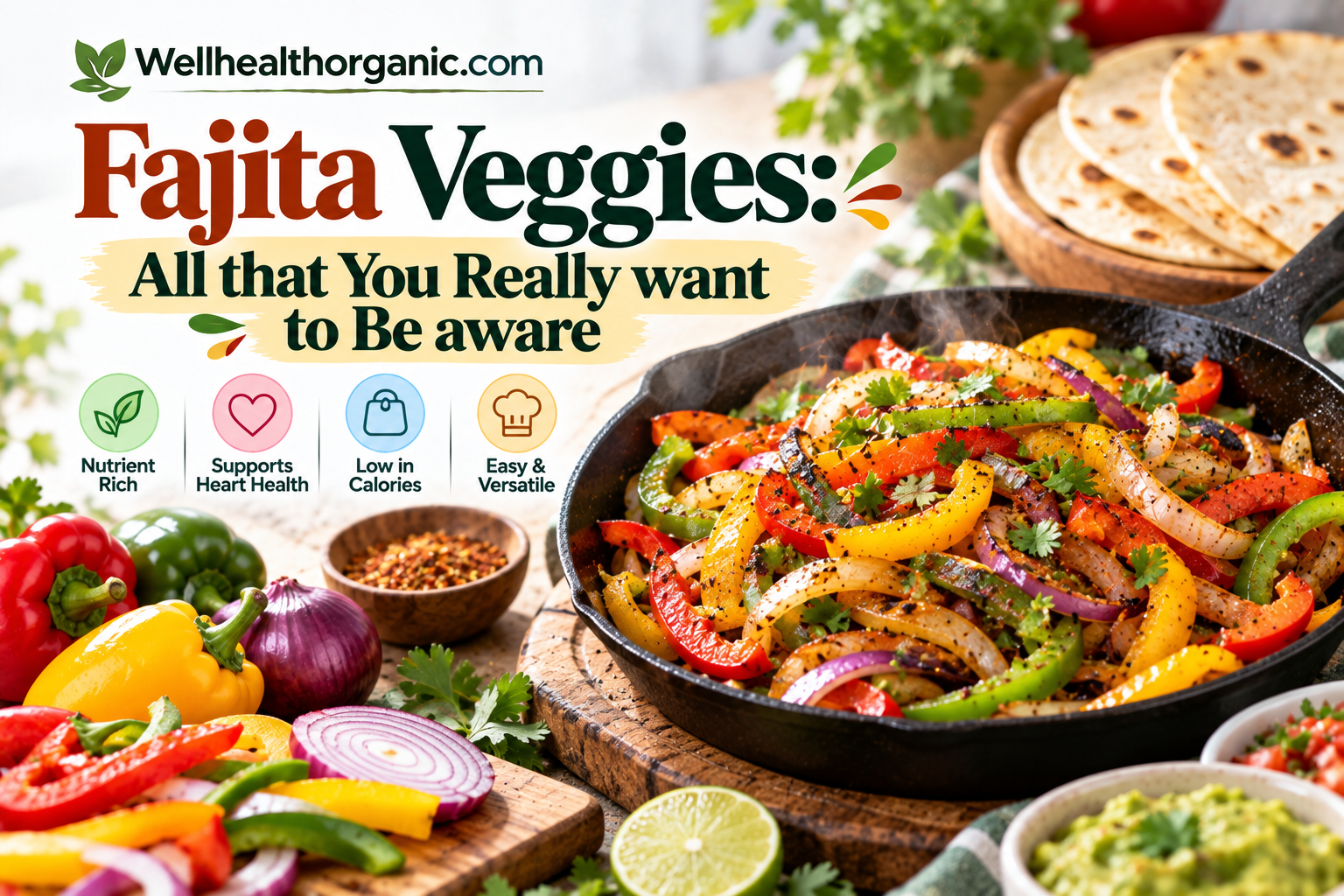
Fajita veggies are a colorful, flavorful combination of sliced bell peppers and onions cooked until tender while still retaining a slight bite. They are commonly served with fajitas but can also be added to tacos, burritos, burrito bowls, salads, quesadillas, wraps, rice bowls, and many other dishes.
One of the best things about fajita vegetables is their simplicity. With bell peppers, onions, a little oil, and a few seasonings, you can prepare a versatile vegetable side dish in just a few minutes.
In this guide, you’ll learn what fajita veggies are, which vegetables to use, how to cook them, how to season them, their nutritional benefits, storage tips, and different ways to serve them.
What Are Fajita Veggies?
Fajita veggies typically consist of sliced bell peppers and onions sautéed or grilled over relatively high heat.
The vegetables are cooked until softened and lightly browned while ideally retaining some texture rather than becoming completely soft.
Although peppers and onions are the classic combination, you can customize fajita vegetables by adding mushrooms, zucchini, garlic, poblano peppers, or other vegetables.
What Vegetables Go in Fajitas?
The classic vegetables used for fajitas are:
- Bell peppers
- Onions
You can use red, green, yellow, or orange bell peppers individually or combine several colors.
White, yellow, sweet, or red onions can all work depending on the flavor you prefer.
Best Peppers for Fajita Veggies
Bell peppers are among the most popular choices because they become slightly sweet when cooked and provide plenty of color.
Red Bell Peppers
Red bell peppers have a relatively sweet flavor and add bright color to fajitas.
Green Bell Peppers
Green bell peppers generally have a less sweet and slightly more vegetal flavor than fully ripened red, yellow, or orange peppers.
Yellow and Orange Bell Peppers
Yellow and orange peppers provide additional sweetness and color.
For a visually appealing fajita mixture, try combining two or three different colors.
Best Onions for Fajita Veggies
Several types of onions work well in fajitas.
- Yellow onions: versatile and develop sweetness as they cook.
- White onions: commonly used in Mexican-inspired dishes and have a relatively sharp flavor when raw.
- Red onions: add color and a distinctive flavor.
- Sweet onions: useful when you prefer a milder, sweeter result.
There is no single correct onion for fajita vegetables, so choose according to availability and personal preference.
Optional Vegetables for Fajitas
Bell peppers and onions form the traditional base, but additional vegetables can make the dish more substantial.
Popular additions include:
- Mushrooms
- Zucchini
- Poblano peppers
- Jalapeños
- Corn
- Garlic
- Tomatoes
Keep in mind that vegetables release different amounts of moisture and require different cooking times. Adding too many high-moisture vegetables at once can cause the mixture to steam rather than brown.
Easy Fajita Veggies Recipe
This simple recipe makes flavorful fajita vegetables using bell peppers, onions, oil, and seasonings.
Ingredients
- 1 red bell pepper
- 1 green bell pepper
- 1 yellow or orange bell pepper
- 1 large onion
- 1 to 2 tablespoons olive oil or another suitable cooking oil
- 1/2 teaspoon ground cumin
- 1/2 teaspoon chili powder
- 1/4 teaspoon garlic powder
- Salt to taste
- Black pepper to taste
- Fresh lime juice, optional
How to Make Fajita Veggies
Step 1: Prepare the Vegetables
Wash and dry the bell peppers. Remove the stems, seeds, and membranes, then slice the peppers into strips.
Peel the onion and slice it into strips of a similar thickness.
Keeping the vegetables reasonably uniform helps them cook more evenly.
Step 2: Heat the Pan
Place a large skillet over medium-high to high heat and allow it to become hot.
Add the cooking oil and distribute it across the surface of the pan.
Step 3: Add the Vegetables
Add the sliced peppers and onions to the hot skillet.
Try to spread the vegetables into a relatively even layer. If the skillet is overcrowded, cook the vegetables in batches.
Step 4: Cook Until Lightly Browned
Cook the vegetables for approximately 6 to 10 minutes, stirring periodically.
The exact cooking time depends on the thickness of your slices, the amount of vegetables, your cookware, and how soft you prefer them.
For classic fajita-style vegetables, aim for vegetables that are softened and lightly browned while still retaining some texture.
Step 5: Add Seasonings
Add cumin, chili powder, garlic powder, salt, and black pepper.
Toss until the seasonings are evenly distributed.
Step 6: Finish and Serve
Remove the vegetables from the heat and add a squeeze of fresh lime juice if desired.
Serve immediately with your favorite fajita ingredients or use them in tacos, burritos, bowls, salads, and other dishes.
Simple Fajita Veggie Seasoning
You don’t need a complicated seasoning blend to make flavorful fajita vegetables.
A simple combination can include:
- Chili powder
- Ground cumin
- Garlic powder
- Black pepper
- Salt
Optional additions include:
- Smoked paprika
- Oregano
- Onion powder
- Cayenne pepper
- Fresh garlic
- Lime juice
- Fresh cilantro
Adjust the amount of chili powder and cayenne according to your preferred level of heat.
How to Make Fajita Veggies Without Seasoning
If you prefer a simpler flavor, peppers and onions can be cooked with just oil, salt, and black pepper.
The high-temperature cooking process develops additional flavor as the vegetables soften and begin to brown.
You can then add salsa, guacamole, lime juice, hot sauce, or other toppings when serving.
Chipotle-Style Fajita Veggies
Restaurant-style fajita vegetables are often simpler than homemade recipes containing extensive seasoning blends.
For a simple Chipotle-inspired fajita veggie approach, use sliced bell peppers and onions with a small amount of oil, salt, and oregano.
Cook them over relatively high heat until the vegetables soften and develop some browned edges.
This creates a simple fajita vegetable mixture that works particularly well in burrito bowls, tacos, and rice bowls.
How to Make Fajita Veggies on the Grill
Fajita vegetables can also be prepared on an outdoor grill.
Slice the vegetables into pieces large enough that they won’t easily fall through the grill grates, or use a grill basket.
Lightly coat them with oil and seasonings and grill until tender and lightly charred.
Cooking time varies according to the grill temperature and thickness of the vegetables, so monitor them closely.
How to Make Fajita Veggies in the Oven
Oven-roasting is useful when preparing a larger quantity of vegetables.
Spread sliced peppers and onions on a baking sheet, lightly coat them with oil and seasonings, and roast at a relatively high temperature until softened and browned around the edges.
Avoid overcrowding the baking sheet because excess moisture can cause the vegetables to steam instead of roast.
Can You Make Fajita Veggies Without Oil?
Yes. Fajita vegetables can be cooked without added oil, although their texture and browning may differ.
Use a good nonstick skillet and add small amounts of water or broth if the vegetables begin sticking.
Oil contributes flavor and helps with browning, so oil-free fajita vegetables will not necessarily taste or cook exactly the same as those prepared with oil.
Can You Use Frozen Vegetables for Fajitas?
Yes. Frozen bell peppers and onions can be used when fresh vegetables are unavailable or when convenience is important.
Frozen vegetables generally release more water during cooking, so achieving browned or lightly charred edges can be more difficult.
For better results:
- Use a large, hot skillet.
- Avoid overcrowding the pan.
- Allow excess moisture to evaporate.
- Cook in batches when necessary.
Fresh vegetables generally provide a firmer texture, but frozen vegetables are a convenient alternative.
Are Fajita Veggies Healthy?
Fajita vegetables can be a nutritious addition to a balanced meal.
Bell peppers and onions provide vitamins, minerals, fiber, and naturally occurring plant compounds.
The overall nutritional profile of fajita vegetables depends on the ingredients, amount of cooking oil, seasonings, portion size, and what you serve alongside them.
Nutritional Benefits of Bell Peppers
Bell peppers are particularly known as a source of vitamin C.
They can also provide:
- Vitamin C
- Vitamin A precursors such as carotenoids
- Vitamin B6
- Folate
- Fiber
- Potassium
- Various plant compounds
The exact nutrient content varies according to the color, ripeness, serving size, and preparation method.
Nutritional Benefits of Onions
Onions provide small amounts of several vitamins and minerals along with fiber and naturally occurring plant compounds.
They also contain sulfur-containing compounds and flavonoids.
Rather than viewing onions as a source of one particular nutrient, consider them another vegetable that can contribute variety to your overall diet.
Are Fajita Veggies Low in Calories?
Bell peppers and onions themselves are relatively low in calories.
However, the total calorie content of prepared fajita vegetables depends significantly on the amount of oil used during cooking.
Oil is calorie-dense, so using large quantities can substantially increase the calories in the final dish.
This does not mean oil needs to be avoided. Use an amount appropriate for your preferences and nutritional goals.
Are Fajita Veggies High in Fiber?
Bell peppers and onions contain dietary fiber and can contribute to your overall daily fiber intake.
Fiber supports normal digestive function and can contribute to feelings of fullness.
However, fajita vegetables should not necessarily be described as extremely high in fiber. Combining them with beans, lentils, whole grains, avocado, or other fiber-rich foods can create a meal with considerably more fiber.
Are Fajita Veggies Vegan?
Fajita vegetables made from peppers, onions, plant-based oil, and seasonings are naturally vegan.
However, when ordering them at a restaurant, preparation methods can vary. If you follow a strict vegan diet, you may want to ask about the cooking ingredients and potential cross-contact.
Are Fajita Veggies Gluten-Free?
Plain bell peppers, onions, oil, and individual spices are naturally gluten-free.
If you’re using packaged fajita seasoning, sauces, or restaurant-prepared vegetables, check the ingredient information if you need to avoid gluten for medical reasons.
People with celiac disease should also consider possible cross-contact during preparation.
Fajita Veggies for Weight Management
Vegetables such as peppers and onions can fit easily into a weight-management eating plan because they provide volume and nutrients without being particularly calorie-dense on their own.
However, no individual food causes weight loss.
Long-term weight changes depend on overall energy intake and expenditure along with factors such as physical activity, sleep, medications, health conditions, and genetics.
If calorie intake is a consideration, pay attention to cooking oil, cheese, sour cream, tortillas, sauces, and other ingredients served with the vegetables.
What to Serve With Fajita Veggies
Fajita vegetables are extremely versatile and can be paired with many different foods.
Chicken Fajitas
Serve peppers and onions with seasoned grilled or pan-cooked chicken, tortillas, salsa, and other toppings.
Steak Fajitas
Pair fajita vegetables with sliced steak for a classic combination.
Shrimp Fajitas
Shrimp cooks quickly and pairs well with peppers, onions, lime, and fajita seasonings.
Vegetarian Fajitas
Combine the vegetables with beans, tofu, tempeh, mushrooms, or another plant-based protein.
Vegan Fajitas
For a vegan meal, serve the vegetables with black beans, pinto beans, tofu, tempeh, guacamole, salsa, and tortillas made without animal-derived ingredients.
Other Ways to Use Fajita Veggies
You don’t have to serve these vegetables only as traditional fajitas.
Tacos
Add fajita vegetables to soft or crispy tacos along with your preferred protein, beans, salsa, and toppings.
Burritos
Combine peppers and onions with rice, beans, protein, salsa, and other ingredients inside a tortilla.
Burrito Bowls
Add fajita vegetables to a bowl containing rice or another grain, beans, protein, salsa, lettuce, and guacamole.
Quesadillas
Add cooked peppers and onions to quesadillas along with cheese or a suitable alternative.
Salads
Warm fajita vegetables can add flavor, color, and texture to salads.
Sandwiches and Wraps
Use them as a filling alongside grilled chicken, steak, tofu, beans, hummus, or other ingredients.
Rice Bowls
Serve fajita vegetables over rice with beans, salsa, avocado, and your preferred protein.
Eggs and Omelets
Leftover peppers and onions can be added to scrambled eggs, omelets, or breakfast burritos.
Pizza
Cooked peppers and onions can also be used as pizza toppings.
Tips for Making the Best Fajita Veggies
Cut the Vegetables Evenly
Try to slice the peppers and onions into similar-sized strips so they cook at approximately the same rate.
Use a Hot Pan
A properly heated skillet helps the vegetables develop browned edges instead of simply steaming.
Don’t Overcrowd the Skillet
Adding too many vegetables at once traps steam and makes browning more difficult.
If you’re cooking a large quantity, prepare the vegetables in batches.
Don’t Stir Constantly
Allow the vegetables to remain in contact with the hot pan briefly between stirring. This can help create browned areas and additional flavor.
Don’t Overcook Them
For fajitas, peppers and onions are often best when tender but still retain some texture.
However, there is no strict rule, so cook them longer if you prefer softer vegetables.
Add Lime at the End
A squeeze of fresh lime juice just before serving can add acidity and brightness.
Common Fajita Veggie Mistakes
If your fajita vegetables turn out watery, soggy, or bland, one of these common mistakes may be responsible:
- Overcrowding the skillet
- Using a pan that isn’t hot enough
- Adding excessive liquid
- Cooking frozen vegetables without allowing moisture to evaporate
- Cutting vegetables into dramatically different sizes
- Overcooking the vegetables
- Using too little seasoning
How to Store Leftover Fajita Veggies
Allow cooked vegetables to cool appropriately and refrigerate leftovers promptly in a covered, food-safe container.
For best quality, they are generally best eaten within a few days.
If the vegetables develop an unusual smell, appearance, or texture that suggests spoilage, discard them.
How to Reheat Fajita Veggies
A skillet is one of the best ways to reheat fajita vegetables because it can help restore some of their original texture.
Place the vegetables in a hot skillet and cook briefly until heated through.
You can also use a microwave for convenience, although the vegetables may become somewhat softer.
Can You Freeze Cooked Fajita Veggies?
Yes, cooked peppers and onions can be frozen, although their texture may become softer after thawing.
Freeze cooled vegetables in an appropriate freezer-safe container or bag.
Frozen fajita vegetables can be particularly useful later in burritos, quesadillas, soups, rice bowls, and other dishes where a softer texture is less noticeable.
Can You Meal Prep Fajita Veggies?
Yes. Fajita vegetables work well for meal preparation.
You can slice the raw vegetables ahead of time and refrigerate them until you’re ready to cook, or cook a larger batch and portion it with other meal-prep ingredients.
They pair particularly well with:
- Rice
- Quinoa
- Beans
- Chicken
- Steak
- Shrimp
- Tofu
- Tempeh
Conclusion
Fajita veggies are a simple and versatile combination of bell peppers and onions that can add color, flavor, texture, and nutrients to many meals.
The classic recipe requires only peppers, onions, a small amount of oil, and seasonings. You can keep the recipe simple or customize it with mushrooms, zucchini, poblano peppers, garlic, or other vegetables.
For the best texture, use a hot skillet, avoid overcrowding the pan, and cook the vegetables until tender with lightly browned edges.
Whether you’re making chicken fajitas, steak fajitas, vegetarian tacos, burrito bowls, quesadillas, salads, or meal-prep dishes, fajita vegetables are an easy way to add more vegetables to your meal.
Frequently Asked Questions About Fajita Veggies
What are fajita veggies?
Fajita veggies are typically sliced bell peppers and onions cooked over relatively high heat until tender and lightly browned. They are commonly served with fajitas but can also be used in tacos, burritos, bowls, salads, and other dishes.
What are fajita veggies made of?
The classic combination consists of bell peppers and onions. Additional ingredients can include mushrooms, zucchini, garlic, poblano peppers, or jalapeños.
What peppers are best for fajitas?
Red, green, yellow, and orange bell peppers all work well. Combining several colors creates a colorful mixture with slightly different flavors.
What kind of onion is best for fajitas?
Yellow, white, red, and sweet onions can all be used. Yellow and white onions are common choices, but the best option depends on your preferred flavor.
How do you cook fajita veggies?
Slice peppers and onions into strips, heat a skillet over medium-high to high heat, add a small amount of oil, and cook the vegetables until softened and lightly browned. Season according to your preferences.
How long should you cook fajita veggies?
They commonly take approximately 6 to 10 minutes in a hot skillet, but cooking time varies according to the amount of vegetables, slice thickness, cookware, heat level, and desired texture.
What seasoning is good for fajita veggies?
A simple mixture of cumin, chili powder, garlic powder, salt, and black pepper works well. You can also add smoked paprika, oregano, cayenne, fresh garlic, cilantro, or lime juice.
Are fajita veggies healthy?
Fajita vegetables can be a nutritious part of a balanced diet. Bell peppers and onions provide fiber, vitamins, minerals, and naturally occurring plant compounds. The overall nutritional profile depends partly on the amount of oil and other ingredients used.
Are fajita veggies low in calories?
Bell peppers and onions are relatively low in calories. Cooking oil increases the calorie content, so the total depends on how the vegetables are prepared.
Are fajita veggies vegan?
Fajita vegetables made with peppers, onions, plant-based oil, and seasonings are vegan. Restaurant recipes may vary, so check preparation methods when necessary.
Are fajita veggies gluten-free?
Plain peppers, onions, oil, and individual spices are naturally gluten-free. Packaged seasonings, sauces, and restaurant preparation should be checked if you need to strictly avoid gluten.
Can I use frozen vegetables for fajita veggies?
Yes. Frozen peppers and onions can be used, although they tend to release more moisture and may have a softer texture than fresh vegetables.
Can I make fajita veggies without oil?
Yes. You can cook them in a nonstick skillet and use small amounts of water or broth if necessary. However, oil can help with browning and flavor.
Can I make fajita veggies ahead of time?
Yes. You can slice the vegetables ahead of time or cook them as part of meal preparation and refrigerate them appropriately until needed.
How do you keep fajita veggies from getting soggy?
Use a large, hot skillet, avoid overcrowding the pan, don’t add excessive liquid, and avoid overcooking. Cooking in batches can help when preparing a large amount.
How do you store leftover fajita veggies?
Store cooled leftovers promptly in a covered container in the refrigerator and use them within a few days for best quality.
Can you freeze fajita veggies?
Yes. Cooked fajita vegetables can be frozen, although peppers and onions may become softer after thawing and reheating.
What can I eat with fajita veggies?
Serve them with chicken, steak, shrimp, tofu, beans, rice, tortillas, salsa, guacamole, or other ingredients. They can also be added to tacos, burritos, quesadillas, salads, wraps, omelets, and rice bowls.