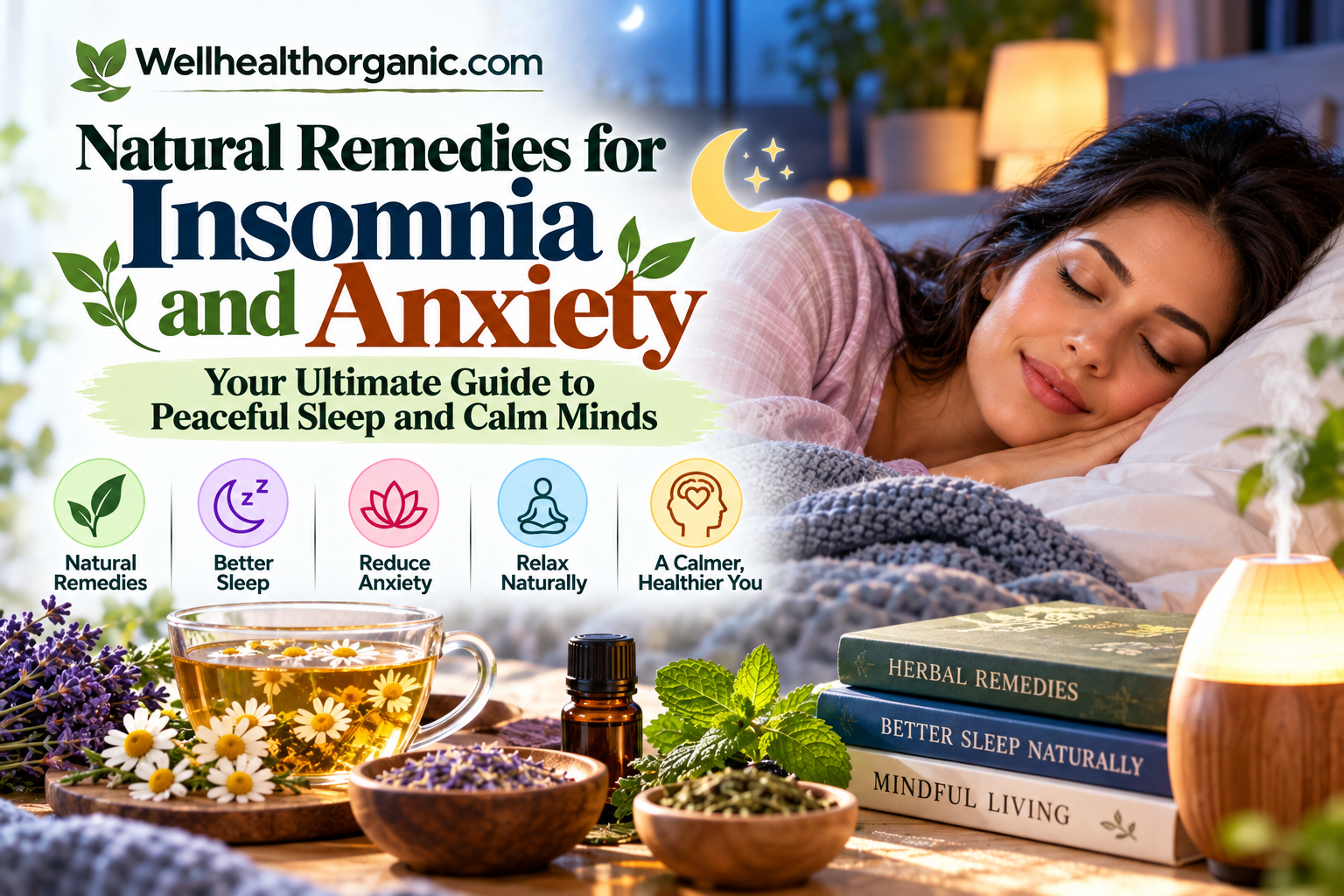
Insomnia and anxiety are common problems that can affect sleep, concentration, mood, energy, relationships, and overall quality of life. They are also closely connected: anxiety can make it difficult to fall or stay asleep, while inadequate sleep can make worry, irritability, and emotional distress more difficult to manage.
Many people search for natural remedies for insomnia and anxiety because they want to improve sleep and reduce stress without immediately relying on medication. Some non-drug approaches, particularly behavioral therapies, relaxation techniques, regular exercise, and healthy sleep habits, can be useful. Evidence for herbal remedies and dietary supplements varies considerably.
This guide explores practical strategies for improving sleep and managing anxiety, including sleep hygiene, cognitive behavioral therapy for insomnia (CBT-I), exercise, meditation, breathing exercises, relaxation techniques, and commonly discussed supplements and herbal products.
What Is Insomnia?
Insomnia involves difficulty falling asleep, staying asleep, waking earlier than intended, or experiencing sleep difficulties despite having an adequate opportunity to sleep.
Occasional poor sleep is common and does not necessarily mean that someone has an insomnia disorder.
When sleep difficulties become persistent and interfere with daytime functioning, professional evaluation may be appropriate.
Common Symptoms of Insomnia
People experiencing insomnia may notice:
- Difficulty falling asleep
- Frequent nighttime awakenings
- Difficulty returning to sleep
- Waking earlier than desired
- Daytime tiredness
- Difficulty concentrating
- Irritability
- Concerns or frustration about sleep
The pattern can vary considerably from one person to another.
What Is Anxiety?
Anxiety is a normal human response to uncertainty, perceived danger, stress, and challenging situations.
Feeling anxious before an important event, examination, interview, or major life change does not automatically indicate an anxiety disorder.
However, anxiety may require professional attention when fear or worry becomes excessive, difficult to control, persistent, or significantly interferes with everyday life.
Common Symptoms of Anxiety
Anxiety can involve both psychological and physical symptoms, including:
- Persistent worry
- Restlessness
- Feeling tense or on edge
- Difficulty concentrating
- Irritability
- Sleep problems
- Muscle tension
- Rapid heartbeat
- Sweating
- Digestive discomfort
Similar symptoms can also occur with medical conditions, medications, substance use, and other mental health conditions, so persistent symptoms should not automatically be self-diagnosed as anxiety.
The Connection Between Insomnia and Anxiety
Sleep and anxiety can influence each other.
Someone who is anxious may lie awake worrying, repeatedly check the time, or find it difficult to relax enough to sleep.
After several difficult nights, the person may begin worrying about sleep itself. Thoughts such as “I won’t be able to function tomorrow” can increase arousal and make falling asleep even more difficult.
At the same time, insufficient or disrupted sleep can negatively affect mood and emotional regulation.
Breaking this cycle often requires addressing both sleep behaviors and anxiety rather than focusing on only one symptom.
What Causes Insomnia?
Many factors can contribute to sleep difficulties.
Possible contributors include:
- Stress
- Anxiety
- Depression or other mental health conditions
- Irregular sleep schedules
- Shift work
- Jet lag
- Caffeine
- Alcohol
- Nicotine
- Certain medications
- Chronic pain
- Sleep apnea
- Restless legs syndrome
- Other medical conditions
Identifying the cause can be more useful than simply trying to make yourself sleep with supplements or medications.
Natural Remedies for Insomnia and Anxiety
The term “natural remedy” can mean many different things. Some people use it to describe behavioral approaches such as meditation and exercise, while others mean herbs and dietary supplements.
These approaches should not all be treated as equally effective or equally safe.
Some of the most useful non-drug approaches focus on changing sleep habits, reducing physiological arousal, managing stress, and treating the behavioral cycle that maintains insomnia.
1. Maintain a Consistent Sleep Schedule
A regular wake time can help support the body’s sleep-wake rhythm.
Try to wake at approximately the same time each day when practical, including weekends.
Large differences between weekday and weekend schedules can make maintaining a regular sleep pattern more difficult for some people.
Avoid forcing yourself to go to bed extremely early simply because you had a poor night’s sleep. Going to bed before you are sleepy can sometimes result in spending more time awake in bed.
2. Create a Relaxing Bedtime Routine
A predictable routine can help create a transition between daytime activities and sleep.
Your routine might include:
- Taking a warm shower or bath
- Reading something relaxing
- Listening to calm music
- Gentle stretching
- Practicing relaxation exercises
- Dimming bright lights
- Preparing the bedroom for sleep
The routine does not need to be complicated. Consistency and relaxation are generally more important than following a specific ritual.
3. Make Your Bedroom Comfortable
Your sleep environment can influence sleep quality.
When possible, keep your bedroom:
- Dark
- Quiet
- Comfortably cool
- Free from unnecessary disturbances
Blackout curtains, earplugs, an eye mask, a fan, or white noise may be useful depending on your environment and preferences.
4. Reduce Caffeine
Caffeine is a stimulant and can interfere with sleep in susceptible individuals.
Sources include:
- Coffee
- Tea
- Energy drinks
- Cola
- Chocolate
- Some medications and supplements
Caffeine can remain in the body for many hours. If you have difficulty sleeping, consider whether afternoon or evening caffeine may be contributing.
Individual sensitivity varies significantly.
5. Be Careful With Alcohol
Alcohol can initially make some people feel sleepy, but that does not necessarily mean it improves sleep quality.
Alcohol can contribute to fragmented sleep and may worsen certain sleep-related breathing problems.
Using alcohol specifically as a sleep aid is therefore not a good long-term strategy.
6. Avoid Nicotine Near Bedtime
Nicotine is a stimulant and may interfere with sleep.
Smoking, vaping, or using other nicotine-containing products near bedtime can make falling asleep more difficult for some individuals.
Avoiding tobacco and nicotine also has important health benefits beyond sleep.
7. Exercise Regularly
Regular physical activity can support both physical and mental health and may improve sleep in many people.
Activities can include:
- Walking
- Jogging
- Cycling
- Swimming
- Strength training
- Yoga
- Dancing
The best exercise is often an activity that is safe, enjoyable, and sustainable.
If intense exercise very close to bedtime makes you feel more alert, consider completing vigorous workouts earlier in the day.
8. Get Daytime Light Exposure
Light is one of the environmental signals involved in regulating the body’s circadian rhythm.
Exposure to daylight, particularly earlier in the day, can help reinforce a regular sleep-wake schedule.
This can be as simple as spending some time outdoors or near natural daylight during the morning when practical.
9. Limit Long or Late Naps
Napping is not automatically unhealthy, but long or late naps can reduce sleep pressure and make nighttime sleep more difficult for some people with insomnia.
If you regularly struggle to fall asleep at night, consider whether your daytime naps are contributing.
10. Reduce Screen-Related Stimulation Before Bed
Phones, computers, televisions, games, social media, work emails, and other digital activities can keep the brain engaged when you are trying to wind down.
Bright light in the evening can also influence circadian timing.
You do not necessarily need to eliminate all screens for a fixed number of hours. Instead, consider reducing stimulating activities and bright light as bedtime approaches.
Cognitive Behavioral Therapy for Insomnia
Cognitive behavioral therapy for insomnia (CBT-I) is an evidence-based treatment specifically designed for persistent insomnia.
Unlike simply taking a sleep aid, CBT-I addresses thoughts, behaviors, and patterns that can maintain sleep difficulties.
CBT-I can include several components depending on the individual’s needs.
Stimulus Control
Stimulus control aims to strengthen the association between the bed and sleep.
For example, people may be encouraged to avoid spending long periods awake in bed worrying, working, scrolling on their phones, or watching television.
Sleep Restriction or Sleep Compression
Under appropriate guidance, time spent in bed may be adjusted to more closely match actual sleep time and then gradually increased as sleep becomes more consolidated.
This technique can be highly effective but should be used carefully, particularly in people with certain medical conditions, significant daytime sleepiness, bipolar disorder, seizure disorders, or safety-sensitive occupations.
Cognitive Strategies
CBT-I can help address unhelpful beliefs and worries about sleep.
For example, catastrophic thoughts about the consequences of one poor night can increase anxiety and make sleeping even harder.
Relaxation Training
Relaxation techniques can help reduce physical and mental arousal around bedtime.
Why CBT-I Is Important
CBT-I is one of the best-supported non-drug treatments for chronic insomnia.
Its goal is not simply to make someone sleepy for one night but to change the patterns that contribute to persistent insomnia.
CBT-I may be provided by appropriately trained healthcare professionals and can also be available through structured digital programs in some locations.
Cognitive Behavioral Therapy for Anxiety
Cognitive behavioral therapy, or CBT, is also widely used for anxiety disorders.
CBT can help people recognize patterns of thoughts, emotions, and behaviors that contribute to anxiety and develop more effective ways of responding to them.
Depending on the anxiety disorder, treatment may also include carefully planned exposure-based techniques.
Mindfulness Meditation
Mindfulness involves intentionally paying attention to present-moment experiences without automatically judging or reacting to them.
For some people, mindfulness practice can help reduce stress and improve their relationship with anxious thoughts.
A simple practice might involve focusing attention on breathing and gently returning attention to the breath whenever the mind wanders.
Meditation should not be viewed as a guaranteed cure for insomnia or an anxiety disorder, but it can be one useful component of a broader management plan.
Deep Breathing Exercises
Slow, controlled breathing can help some people feel calmer during periods of stress or anxiety.
A simple approach is to breathe gently through the nose, allow the abdomen to expand naturally, and gradually slow the breathing rate without forcing extremely deep breaths.
The goal is comfortable, relaxed breathing rather than achieving a specific numerical pattern.
What Is the 4-7-8 Breathing Technique?
The 4-7-8 method is a popular structured breathing exercise involving inhaling, holding the breath, and exhaling for specified counts.
Some people find structured breathing relaxing, but there is no requirement to use this exact pattern.
If breath-holding causes dizziness, discomfort, or anxiety, stop and return to normal breathing.
Box Breathing
Box breathing is another structured technique in which inhalation, breath holding, exhalation, and another pause are performed for approximately equal counts.
It may help some people focus their attention and slow their breathing during stressful situations.
Again, breathing exercises should feel comfortable rather than forced.
Progressive Muscle Relaxation
Progressive muscle relaxation (PMR) involves intentionally tensing and then relaxing different muscle groups.
A typical practice might move progressively through areas such as:
- Feet
- Legs
- Abdomen
- Hands
- Arms
- Shoulders
- Face
PMR can help people become more aware of physical tension and practice releasing it.
Yoga for Sleep and Anxiety
Yoga combines movement, breathing, and attention and may help some people with stress and relaxation.
Gentle yoga may be particularly suitable near bedtime for people who find it relaxing.
People with injuries, balance problems, pregnancy, cardiovascular conditions, or other medical concerns may need modifications or professional guidance.
Journaling Before Bed
People who spend bedtime mentally reviewing unfinished tasks or worries may find it useful to write them down earlier in the evening.
A simple journal can include:
- Tasks for tomorrow
- Current worries
- Possible next steps
- Positive events from the day
The goal is not to solve every problem before sleeping but to reduce the feeling that everything must remain mentally active throughout the night.
Diet and Sleep
No single food reliably cures insomnia.
However, overall nutrition and meal timing can influence comfort and health.
Eating a very large meal immediately before lying down may contribute to discomfort or reflux in some people.
Going to bed extremely hungry can also interfere with sleep for some individuals.
A balanced dietary pattern is generally more useful than searching for a specific “sleep food.”
Hydration and Sleep
Staying appropriately hydrated is important for general health.
However, consuming large amounts of fluid immediately before bed may result in repeated nighttime trips to the bathroom.
Consider spreading fluid intake throughout the day rather than trying to drink most of it shortly before sleeping.
Herbal Remedies for Insomnia and Anxiety
Herbal products are frequently marketed as natural solutions for sleep and anxiety.
However, “natural” does not automatically mean effective, safe, or appropriate for everyone.
Evidence varies significantly between products, and herbal preparations can differ in strength, purity, formulation, and quality.
Herbs can also cause side effects and interact with prescription medications.
Valerian Root
Valerian is one of the most commonly marketed herbal sleep products.
Research on valerian for insomnia has produced mixed results, and it should not be considered a proven replacement for established insomnia treatments such as CBT-I.
Possible adverse effects can include headache, digestive symptoms, dizziness, or drowsiness.
Combining valerian with alcohol, sedatives, or other substances that cause drowsiness may increase impairment.
Chamomile
Chamomile tea is commonly consumed as part of a relaxing evening routine.
Some people find it soothing, but evidence that chamomile reliably treats chronic insomnia or anxiety disorders is limited.
Chamomile can also cause allergic reactions, particularly in people sensitive to related plants.
Potential medication interactions should also be considered when concentrated supplements are used.
Lavender
Lavender is commonly used in aromatherapy and relaxation products.
The scent may help some individuals create a calming bedtime environment, but aromatherapy should not be considered a replacement for evidence-based treatment of chronic insomnia or anxiety disorders.
Essential oils should be used according to product safety instructions and kept away from children and pets.
Passionflower
Passionflower is marketed in teas and supplements for relaxation and anxiety.
Evidence remains limited, and products can vary substantially.
Passionflower may cause drowsiness and may interact with medications or other sedating substances.
Seek professional advice before combining it with medications.
Lemon Balm
Lemon balm is another herb traditionally associated with relaxation.
Some preliminary research has investigated its effects on stress, anxiety, and sleep, but stronger evidence is needed before it can be considered an established treatment.
Supplement products can contain much more concentrated amounts than would normally be consumed in food or tea.
Ashwagandha
Ashwagandha is an herb widely marketed for stress and sometimes described as an adaptogen.
Some research suggests potential effects on perceived stress and anxiety in certain populations, but it is not appropriate for everyone.
Ashwagandha supplements can cause adverse effects and may interact with medications.
There have also been reports of liver injury associated with ashwagandha products.
People who are pregnant, have certain thyroid or autoimmune conditions, have liver problems, or take medications should seek professional advice before using ashwagandha.
Essential Oils for Relaxation
Essential oils are commonly used for fragrance and aromatherapy.
Examples include:
- Lavender
- Chamomile
- Ylang-ylang
- Frankincense
Some scents may create a relaxing environment, but evidence for treating clinical insomnia or anxiety with essential oils is limited.
Essential oils should not automatically be swallowed. Concentrated oils can be toxic if used incorrectly.
Essential Oil Safety
If you use essential oils:
- Follow the manufacturer’s safety instructions.
- Avoid swallowing essential oils unless specifically directed by an appropriately qualified healthcare professional using a product intended for that purpose.
- Dilute topical oils appropriately when required.
- Stop use if skin irritation develops.
- Keep oils away from children.
- Consider pets, as some essential oils can be harmful to animals.
People with asthma, allergies, pregnancy, or other health conditions may need additional precautions.
Melatonin for Insomnia
Melatonin is a hormone involved in regulating the body’s sleep-wake timing.
Melatonin supplements can be useful in certain situations involving circadian timing, such as some cases of jet lag or delayed sleep timing.
However, melatonin is not a universal cure for chronic insomnia.
Effectiveness can depend on why someone is having difficulty sleeping, as well as the timing and formulation of the supplement.
Is Melatonin Safe?
Melatonin can cause side effects such as:
- Daytime drowsiness
- Headache
- Dizziness
- Nausea
Supplement quality and actual melatonin content can also vary between products in markets where supplements are not regulated like prescription medications.
People who are pregnant or breastfeeding, have medical conditions, or take medications should discuss melatonin with a healthcare professional before using it.
Magnesium and Sleep
Magnesium is an essential mineral involved in numerous physiological processes.
People with inadequate magnesium intake or deficiency need appropriate magnesium from food or supplementation when medically indicated.
However, evidence that magnesium supplements reliably treat insomnia in people without a deficiency is limited.
Food sources of magnesium include:
- Nuts
- Seeds
- Legumes
- Whole grains
- Leafy green vegetables
Can Too Much Magnesium Be Harmful?
Yes. Supplemental magnesium can cause diarrhea, nausea, and abdominal cramping.
Very high amounts can cause more serious problems, particularly in people with impaired kidney function.
Magnesium can also interact with certain medications.
L-Theanine
L-theanine is an amino acid naturally present in tea and is also sold as a dietary supplement.
Some research has investigated its potential effects on relaxation, stress, and sleep, but evidence is not strong enough to consider it a standard treatment for insomnia or anxiety disorders.
Anyone considering concentrated L-theanine supplements should review potential interactions and individual health considerations.
5-HTP
5-hydroxytryptophan, commonly called 5-HTP, is sold as a dietary supplement and is involved in serotonin production.
Despite its popularity, evidence supporting 5-HTP as a routine treatment for insomnia or anxiety is limited.
More importantly, 5-HTP can potentially interact with medications that affect serotonin.
Combining serotonergic substances can potentially contribute to a dangerous condition called serotonin syndrome.
Do not combine 5-HTP with antidepressants or other serotonin-affecting medications without professional medical guidance.
GABA Supplements
Gamma-aminobutyric acid, or GABA, is an important inhibitory neurotransmitter in the nervous system.
GABA supplements are marketed for relaxation and sleep, but evidence supporting oral GABA supplements for treating clinical anxiety or insomnia remains limited.
The effects of a neurotransmitter within the brain should not automatically be assumed to occur simply by consuming that neurotransmitter as a dietary supplement.
Can You Combine Sleep Supplements?
Combining several “natural” sleep products is not automatically safe.
Multiple supplements with sedating properties can potentially increase:
- Drowsiness
- Dizziness
- Impaired coordination
- Medication interactions
- Other adverse effects
Always tell your doctor or pharmacist about supplements as well as prescription and over-the-counter medications.
Natural Does Not Mean Risk-Free
This is particularly important with products marketed for sleep and anxiety.
Herbal products and supplements can:
- Cause side effects
- Trigger allergic reactions
- Interact with medications
- Contain inconsistent amounts of active ingredients
- Be inappropriate during pregnancy
- Be risky with certain medical conditions
Use the same caution with supplements that you would use with other biologically active products.
What to Do When You Cannot Sleep
Trying extremely hard to force yourself to sleep can sometimes increase frustration and alertness.
If you have been awake for a while and are becoming frustrated, a CBT-I approach may involve temporarily leaving the bed and doing something quiet and relaxing in dim light.
Return to bed when you feel sleepy.
This can help prevent the bed from becoming strongly associated with worry and wakefulness.
Stop Watching the Clock
Repeatedly checking the time during the night can increase anxiety about how little sleep remains before morning.
If clock-watching makes you anxious, consider turning the clock away or placing your phone where you cannot repeatedly check it.
Don’t Chase Perfect Sleep
Occasional poor sleep is normal.
Becoming excessively focused on achieving a perfect number of hours every night can itself create sleep-related anxiety.
A healthier goal is developing consistent sleep habits while recognizing that sleep naturally varies from night to night.
Track Your Sleep Carefully
A simple sleep diary can be useful when evaluating persistent insomnia.
You might record:
- Approximate bedtime
- Approximate time it took to fall asleep
- Nighttime awakenings
- Wake time
- Naps
- Caffeine and alcohol consumption
- Exercise
- How you felt during the day
However, detailed sleep tracking can make some people more anxious. If monitoring sleep increases worry, discuss whether it is useful with a healthcare professional.
When Should You See a Doctor for Insomnia?
Consider professional evaluation when sleep problems:
- Persist over time
- Occur frequently
- Significantly interfere with daytime functioning
- Cause dangerous daytime sleepiness
- Occur alongside loud snoring or breathing pauses
- Are associated with uncomfortable sensations or movements in the legs
- Begin after starting a new medication
- Occur with significant depression, anxiety, or other mental health symptoms
A healthcare professional can help determine whether insomnia is the primary problem or a symptom of another condition.
When Should You Seek Help for Anxiety?
Professional support may be appropriate when anxiety:
- Is persistent or overwhelming
- Interferes with work, school, relationships, or daily activities
- Causes repeated panic attacks
- Leads you to avoid important parts of your life
- Occurs alongside depression
- Is associated with problematic alcohol or substance use
Effective treatments are available, including psychotherapy and, when appropriate, medication.
When Is Anxiety an Emergency?
Seek immediate professional or emergency support if you or someone else is at risk of self-harm, suicide, or harming another person.
Severe chest pain, difficulty breathing, fainting, confusion, or other potentially serious physical symptoms should also not automatically be assumed to be anxiety. Seek urgent medical evaluation when appropriate.
Medication for Insomnia and Anxiety
Some people require medication as part of their treatment.
Prescription medications should not be viewed as a failure to manage the problem “naturally.”
Whether medication is appropriate depends on the diagnosis, symptom severity, medical history, other medications, treatment preferences, and potential benefits and risks.
Healthcare professionals may combine medication with behavioral treatment depending on the individual situation.
A Simple Evening Routine for Better Sleep
If you want to begin with a straightforward approach, consider creating a consistent evening routine:
- Finish stimulating work when practical.
- Reduce caffeine later in the day.
- Avoid using alcohol as a sleep aid.
- Dim bright lights as bedtime approaches.
- Do a relaxing activity.
- Keep the bedroom dark, quiet, and comfortable.
- Go to bed when you are sleepy.
- Maintain a relatively consistent wake time.
Give new habits time to become established rather than expecting one night of changes to completely resolve chronic sleep difficulties.
Natural Remedies for Insomnia and Anxiety: What Works Best?
There is no single natural remedy that works for everyone.
For persistent insomnia, behavioral treatment such as CBT-I has substantially stronger support than most herbal sleep supplements.
For anxiety, evidence-based psychotherapy such as CBT can be particularly valuable, while exercise, relaxation, mindfulness, regular sleep, and stress-management strategies may provide additional support.
Herbal products and dietary supplements should be considered cautiously because their evidence and safety profiles vary.
Conclusion
Natural remedies for insomnia and anxiety can include much more than herbs or supplements. Some of the most useful non-drug approaches involve improving sleep habits, exercising regularly, managing stress, practicing relaxation techniques, maintaining a consistent sleep schedule, and using evidence-based behavioral therapies.
For chronic insomnia, cognitive behavioral therapy for insomnia (CBT-I) is an important treatment option because it addresses behaviors and thought patterns that can maintain sleep difficulties.
Herbs and supplements such as valerian, chamomile, lavender, melatonin, magnesium, ashwagandha, L-theanine, 5-HTP, and GABA are frequently marketed for sleep or anxiety, but the evidence varies considerably. Natural products can also cause side effects and medication interactions.
If insomnia or anxiety is persistent, severe, or significantly affecting your daily life, seek professional help rather than relying exclusively on self-treatment. Identifying the underlying problem can help you choose a safer and more effective treatment strategy.
Frequently Asked Questions About Natural Remedies for Insomnia and Anxiety
What is the best natural remedy for insomnia?
There is no single remedy that is best for everyone. For chronic insomnia, CBT-I is one of the strongest evidence-based non-drug treatments. Regular sleep schedules, exercise, relaxation, and appropriate sleep habits can also help.
What is the best natural remedy for anxiety?
No single natural remedy reliably treats every type of anxiety. Regular exercise, mindfulness, relaxation techniques, adequate sleep, and stress management can be useful. Persistent or severe anxiety may benefit from evidence-based psychotherapy such as CBT.
Can anxiety cause insomnia?
Yes. Worry, physical tension, and increased mental arousal can make falling or staying asleep more difficult.
Can insomnia make anxiety worse?
Sleep disruption can affect mood and emotional regulation and may make anxiety symptoms more difficult to manage.
What is CBT-I?
CBT-I stands for cognitive behavioral therapy for insomnia. It is a structured treatment that addresses thoughts and behaviors contributing to persistent sleep problems.
Does melatonin cure insomnia?
No. Melatonin may be helpful in certain situations, particularly some circadian rhythm problems, but it is not a universal treatment for chronic insomnia.
Does magnesium help you sleep?
Magnesium is an essential nutrient, but evidence that supplementation reliably improves insomnia in people without magnesium deficiency is limited.
Does chamomile help with sleep?
Many people find chamomile tea relaxing, but evidence that it reliably treats chronic insomnia is limited.
Does lavender help anxiety?
Lavender fragrance may promote relaxation for some people, but aromatherapy should not replace evidence-based treatment for a significant anxiety disorder.
Does valerian root help insomnia?
Research on valerian has produced mixed results. It should not be considered a proven replacement for established insomnia treatments.
Is ashwagandha good for anxiety?
Some studies have investigated ashwagandha for stress and anxiety, but it is not appropriate for everyone. It can cause side effects, interact with medications, and has been associated with reports of liver injury.
Is 5-HTP safe for anxiety and sleep?
Evidence for 5-HTP is limited, and it can interact with medications that affect serotonin. It should not be combined with antidepressants or other serotonergic medications without professional medical guidance.
Can I take several natural sleep supplements together?
Do not assume that combining supplements is safe. Multiple products may have overlapping sedating effects or medication interactions. Discuss combinations with a doctor or pharmacist.
Can exercise help insomnia and anxiety?
Regular physical activity can support sleep, mood, and general health and may help reduce anxiety symptoms for some people.
Does alcohol help you sleep?
Alcohol may initially cause sleepiness, but it can disrupt sleep later in the night and is not recommended as a sleep treatment.
Should I avoid caffeine if I have insomnia?
If you are sensitive to caffeine, reducing it, particularly later in the day, may improve sleep. Individual sensitivity and caffeine metabolism vary.
What should I do if I wake up and cannot fall back asleep?
If remaining in bed is making you increasingly frustrated or alert, a CBT-I strategy may involve getting out of bed temporarily, doing a quiet activity in dim light, and returning when you feel sleepy.
How long does insomnia last?
Sleep difficulties can be short-term or chronic. Persistent insomnia that repeatedly affects daytime functioning should be evaluated by an appropriate healthcare professional.
When should I see a doctor about insomnia?
Seek professional advice when sleep difficulties are persistent, occur frequently, significantly affect daytime functioning, or are associated with symptoms such as breathing pauses during sleep, severe daytime sleepiness, or significant mental health concerns.
When should I get professional help for anxiety?
Seek professional help when anxiety becomes difficult to control, persists over time, interferes with daily life, causes significant distress, or occurs alongside depression, substance misuse, or thoughts of self-harm.
Disclaimer
This article is provided for general informational and educational purposes only. It is not intended to diagnose or treat insomnia, anxiety, or any other medical or mental health condition and should not replace advice from a qualified healthcare professional. Herbal remedies, essential oils, and dietary supplements can cause adverse effects and interact with medications. Consult an appropriate healthcare professional before using supplements, particularly if you are pregnant or breastfeeding, take prescription medications, have a medical condition, or are considering products for a child. If you are experiencing thoughts of suicide or self-harm or believe you may be in immediate danger, seek emergency or crisis support immediately.