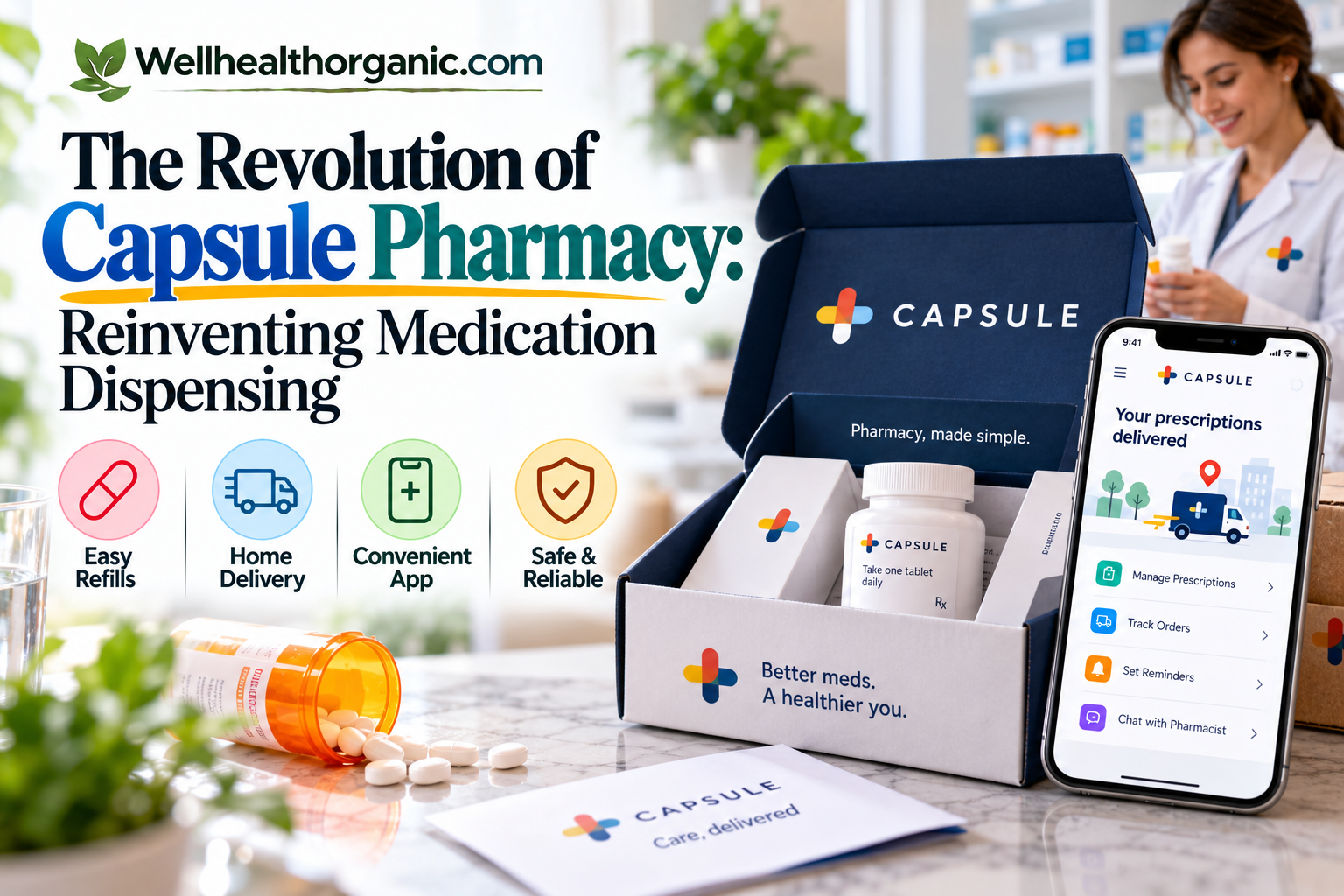
Capsule Pharmacy represents a modern approach to pharmacy services that combines prescription management, technology, pharmacist support, and medication delivery. Instead of requiring every customer to visit a traditional retail pharmacy, digital pharmacy services can allow eligible patients to manage prescriptions and arrange delivery through online or mobile platforms.
However, it is important to distinguish between Capsule Pharmacy, the digital pharmacy company, and a compounding pharmacy. They are not interchangeable terms. Compounding is a specialized pharmacy practice involving preparation of customized medications when clinically appropriate, while Capsule operates as a pharmacy service for filling and delivering prescriptions.
This guide explains how Capsule Pharmacy works, how digital pharmacies differ from traditional and compounding pharmacies, potential advantages and limitations, prescription transfers, medication delivery, pharmacist support, privacy, and other considerations.
What Is Capsule Pharmacy?
Capsule is a technology-enabled pharmacy service designed to make filling and receiving prescriptions more convenient.
Digital pharmacy services can combine traditional pharmacist responsibilities with online prescription management and medication delivery.
Instead of visiting a pharmacy counter for every prescription, patients may be able to coordinate prescriptions electronically, communicate with pharmacy staff, and have eligible medications delivered.
The exact services, delivery options, insurance participation, medication availability, and geographic coverage can change over time and vary by location.
Is Capsule Pharmacy a Compounding Pharmacy?
Capsule Pharmacy should not automatically be described as a compounding pharmacy.
A compounding pharmacy prepares customized medications for particular patients when an appropriate commercially available medication cannot meet a patient’s specific clinical needs.
Compounding might involve changing a medication’s:
- Dosage strength
- Dosage form
- Ingredients
- Flavor
- Method of administration
Digital pharmacy and compounding pharmacy therefore describe different concepts.
What Is a Digital Pharmacy?
A digital pharmacy uses online technology to facilitate some aspects of prescription management and pharmacy services.
Depending on the provider, patients may be able to:
- Transfer eligible prescriptions
- Receive prescription deliveries
- Manage refills
- Communicate with pharmacy staff
- Receive medication-related information
- Coordinate insurance information
The prescription is still processed under applicable pharmacy laws and regulations.
How Does Capsule Pharmacy Work?
The exact process depends on the patient’s location, prescription, insurance, and other circumstances, but digital prescription fulfillment generally involves several steps.
- A healthcare professional sends an eligible prescription to the pharmacy, or an existing prescription is transferred when permitted.
- The pharmacy reviews the prescription and relevant patient information.
- Insurance or payment information may be processed.
- A pharmacist reviews the prescription as required.
- The prescription is prepared for the patient.
- Delivery or another available fulfillment method is arranged.
Some prescriptions may require additional steps because of insurance requirements, medication availability, controlled-substance regulations, or other legal restrictions.
How Is Capsule Different From a Traditional Pharmacy?
Traditional retail pharmacies generally center the experience around a physical pharmacy location. Patients visit the store to submit or collect prescriptions and speak with pharmacy staff.
A digital pharmacy moves more of this process online and may emphasize medication delivery.
However, the fundamental responsibilities of a pharmacy remain important regardless of whether the interaction occurs at a physical counter or through a digital platform.
Capsule Pharmacy vs. Traditional Pharmacy
Both digital and traditional pharmacies can fill prescriptions and provide access to pharmacists, but the customer experience can differ.
Potential differences include:
- How prescriptions are submitted
- Whether medications are delivered
- How patients communicate with pharmacists
- How refills are managed
- Availability of physical locations
- Geographic coverage
Neither model is automatically better for every patient.
Some people value home delivery, while others prefer face-to-face interaction at a neighborhood pharmacy.
Capsule Pharmacy vs. Compounding Pharmacy
The distinction between these services is particularly important.
A digital pharmacy focuses primarily on making conventional pharmacy services more accessible through technology and delivery.
A compounding pharmacy specializes in preparing customized medications when medically appropriate.
For example, a prescriber might request a compounded medication when a patient requires a strength or dosage form that is not commercially available or cannot tolerate a particular ingredient in an available product.
Compounded medications require specific professional and regulatory safeguards and should not be treated as ordinary mass-produced prescription drugs.
Benefits of Digital Pharmacy Services
Digital pharmacy services can offer several potential advantages, particularly for people who value convenience.
Home Medication Delivery
Delivery can reduce the need to travel to a pharmacy to collect routine prescriptions.
This may be particularly convenient for people with busy schedules, transportation difficulties, limited mobility, or recurring prescriptions.
Digital Prescription Management
Online systems can make it easier for some patients to monitor prescriptions, arrange refills, update information, and communicate with the pharmacy.
Pharmacist Access
Digital pharmacies can provide ways for patients to communicate with pharmacy professionals without requiring every interaction to occur at a physical counter.
Prescription Coordination
A digital system may simplify communication between the patient, prescriber, pharmacy, and insurer in some situations.
Medication Delivery
Medication delivery is one of the main features associated with digital pharmacy services.
Instead of traveling to a pharmacy, eligible patients may be able to have prescriptions delivered to an approved address.
Delivery availability can depend on:
- Patient location
- Medication type
- Prescription status
- Insurance requirements
- State regulations
- Delivery schedules
Some medications may have special storage, identification, signature, or delivery requirements.
Why Medication Delivery Can Be Helpful
Prescription delivery can be useful for people who have difficulty reaching a physical pharmacy.
This can include some:
- Older adults
- People with disabilities
- People with limited transportation
- People managing chronic conditions
- Caregivers managing medications for another person
However, patients should still ensure that medications are received, stored, and used appropriately.
Prescription Transfers
Patients may be able to transfer eligible prescriptions from another pharmacy to a digital pharmacy.
The transfer process can involve communication between pharmacies and verification of prescription information.
Not every prescription can necessarily be transferred in the same way. Restrictions can depend on the medication, whether refills remain, applicable state and federal regulations, and other factors.
Can a Doctor Send a Prescription Directly to Capsule?
Electronic prescribing allows healthcare professionals to send many prescriptions directly to pharmacies.
If Capsule is available and appropriate for the patient, the prescriber may be able to send an eligible prescription electronically.
Patients should provide the correct pharmacy information to their healthcare provider.
Prescription Refills
Digital systems can simplify refill management for eligible prescriptions.
However, a refill cannot be provided simply because a patient requests one through an app or website.
The prescription must still have valid refills available or, when necessary, the pharmacy may need authorization from the prescriber.
Can Capsule Automatically Refill Prescriptions?
Refill services depend on the medication, prescription, patient preferences, applicable regulations, and available pharmacy features.
Some medications are inappropriate for automatic refill programs.
Patients should also periodically review medications with their healthcare professionals rather than assuming that every long-term prescription should continue indefinitely.
Pharmacist Support
Pharmacists do considerably more than place medication into containers.
Their responsibilities can include:
- Reviewing prescriptions
- Checking medication information
- Identifying potential drug interactions
- Providing medication counseling
- Answering questions about proper use
- Communicating with prescribers when necessary
These professional responsibilities remain important in a digital pharmacy model.
Medication Safety
Technology can help organize prescription information and pharmacy workflows, but it does not eliminate the possibility of medication errors.
Patient safety still depends on appropriate systems, pharmacist review, accurate information, communication, and regulatory compliance.
Patients can also contribute to medication safety by maintaining an accurate list of their medications, allergies, supplements, and medical conditions.
Drug Interaction Checks
Pharmacists can review medications for potential interactions and other concerns.
However, interaction screening works best when the pharmacy has complete and accurate information.
Tell your pharmacist about:
- Prescription medications
- Over-the-counter medicines
- Vitamins
- Herbal supplements
- Dietary supplements
- Known drug allergies
Do not assume that products described as natural are irrelevant to a medication review.
Electronic Prescriptions
Electronic prescribing allows a healthcare professional to transmit prescription information securely to a pharmacy.
This can reduce problems associated with handwritten prescriptions and make pharmacy communication more efficient.
Electronic prescribing does not mean that every medication can be dispensed automatically. Pharmacists must still follow applicable legal and professional requirements.
Capsule Pharmacy and Telemedicine
Digital pharmacies can complement telemedicine because a patient may receive medical care remotely and then have an eligible prescription sent electronically to a pharmacy.
A typical process may involve:
- A patient has an appropriate telehealth consultation.
- A licensed healthcare professional determines whether medication is needed.
- An eligible prescription is transmitted electronically.
- The pharmacy reviews and processes the prescription.
- The medication is made available through an eligible fulfillment or delivery option.
Telemedicine does not eliminate prescribing requirements, and some medications or medical situations may require additional evaluation.
Does Capsule Replace a Doctor?
No. A pharmacy does not replace diagnosis and medical treatment from an appropriate healthcare professional.
Pharmacists are medication experts who play an important role in patient care, but prescription medications generally require an appropriate prescriber to evaluate the patient and authorize treatment.
Does Capsule Replace a Pharmacist?
No. Technology can automate or streamline administrative and operational tasks, but licensed pharmacists remain an important part of prescription review, medication counseling, and patient safety.
Technology in Modern Pharmacies
Modern pharmacies increasingly use technology to support operations.
Examples can include:
- Electronic prescribing
- Digital prescription records
- Automated dispensing technology
- Inventory-management systems
- Prescription-status notifications
- Secure communication tools
- Insurance-processing systems
The technologies used vary between pharmacy providers.
Does Automation Eliminate Medication Errors?
No. Automation can reduce certain types of manual work and potentially improve efficiency, but no pharmacy system can guarantee the complete elimination of medication errors.
Human oversight, appropriate procedures, accurate patient information, pharmacist review, and quality-control systems remain important.
Electronic Health Information
Healthcare technology can make relevant information easier to exchange between authorized healthcare organizations when appropriate systems and permissions are available.
However, patients should not assume that every pharmacy automatically has access to their complete electronic medical record.
Different healthcare organizations use different systems, and access depends on technical, legal, organizational, and privacy requirements.
Privacy and Security
Digital pharmacy services handle sensitive health and personal information.
Appropriate privacy and cybersecurity protections are therefore important.
Depending on applicable laws and services, protected information can include:
- Patient identity
- Contact information
- Prescription history
- Health information
- Insurance information
- Payment information
Patients should use strong account credentials and be cautious about suspicious messages claiming to come from pharmacies or healthcare providers.
Insurance and Capsule Pharmacy
Insurance coverage can significantly affect prescription costs.
Whether a particular medication is covered depends on factors such as:
- The patient’s insurance plan
- The medication
- The pharmacy network
- Formulary requirements
- Deductibles
- Copayments or coinsurance
- Prior authorization requirements
Patients should verify current insurance coverage and expected out-of-pocket costs for individual prescriptions.
Is Capsule Pharmacy Free?
There is an important difference between pharmacy-service fees and medication costs.
Even when a pharmacy offers delivery without a separate delivery charge in a particular market, patients may still owe a copayment, coinsurance, deductible, or the full medication price.
Costs can vary substantially depending on the prescription and insurance coverage.
Is Capsule Pharmacy Cheaper Than a Traditional Pharmacy?
Not necessarily.
Prescription prices depend on the medication, insurance plan, pharmacy network, available discounts, manufacturer programs, and other factors.
A digital pharmacy may be more convenient for some patients without necessarily being less expensive for every medication.
Controlled Substances and Digital Pharmacies
Controlled substances are subject to additional federal and state regulations.
Whether a particular controlled medication can be filled, transferred, or delivered depends on the prescription, medication schedule, applicable law, pharmacy policies, and patient circumstances.
Patients should contact the pharmacy directly for questions about a specific prescription rather than assuming all controlled substances can be handled like ordinary medications.
Temperature-Sensitive Medications
Some medications require specific storage temperatures.
Pharmacies dispensing temperature-sensitive products must follow appropriate storage and handling requirements.
Delivery can require additional packaging and handling depending on the medication.
Patients should follow storage instructions immediately after receiving the medication.
What Happens if a Medication Is Out of Stock?
Medication shortages can affect both digital and traditional pharmacies.
If a medication is unavailable, possible next steps depend on the prescription and situation.
The pharmacy may need to communicate with the patient, wholesaler, or prescriber.
Patients should not substitute medications or change doses independently because their usual product is unavailable.
Advantages of Capsule Pharmacy and Digital Pharmacies
Potential advantages of digital pharmacy services include:
- Convenient prescription management
- Home delivery where available
- Reduced need for pharmacy trips
- Electronic communication
- Access to pharmacist support
- Convenient refill management
The importance of each benefit varies according to the patient’s needs.
Potential Limitations of Digital Pharmacies
Digital pharmacy services also have limitations.
Potential issues include:
- Limited geographic availability
- Medication availability
- Delivery delays
- Insurance-network restrictions
- Technology or account-access problems
- Special rules for certain medications
- Less face-to-face interaction
Patients who need medication immediately may sometimes find a nearby physical pharmacy more practical than waiting for delivery.
Who May Benefit From a Digital Pharmacy?
A digital pharmacy may be particularly convenient for people who:
- Regularly take prescription medication
- Prefer medication delivery
- Have transportation difficulties
- Have limited mobility
- Prefer digital communication
- Want to reduce routine trips to a pharmacy
Whether it is the right option depends on individual circumstances.
Who May Prefer a Traditional Pharmacy?
A physical pharmacy may be preferable for people who:
- Need a medication immediately
- Prefer face-to-face communication
- Live outside a digital pharmacy’s service area
- Need a service not available through the digital provider
- Have prescriptions with special fulfillment requirements
Some patients use both digital and traditional pharmacy services depending on the prescription.
How to Choose a Pharmacy
Before choosing a pharmacy, consider:
- Licensing
- Medication availability
- Insurance acceptance
- Prescription costs
- Delivery options
- Pharmacist availability
- Customer service
- Privacy practices
- Convenience
For online pharmacy services, verify that the provider is appropriately licensed rather than purchasing prescription medications from an unknown website.
Beware of Unsafe Online Pharmacies
Not every website offering prescription medication is a legitimate pharmacy.
Warning signs can include websites that:
- Offer prescription-only drugs without a valid prescription
- Hide their physical location or licensing information
- Sell suspiciously inexpensive medications
- Offer unapproved or counterfeit products
- Do not provide access to appropriate pharmacy professionals
Obtaining prescription medication from an unverified source can expose patients to counterfeit, contaminated, incorrectly dosed, or otherwise unsafe products.
The Future of Digital Pharmacy
Pharmacy services are likely to continue incorporating digital technology.
Future developments may include improvements in:
- Electronic prescribing
- Medication-delivery logistics
- Prescription management
- Medication-adherence tools
- Pharmacist communication
- Telehealth integration
- Automation
- Healthcare-data interoperability
Technology may make pharmacy services more convenient, but safety, pharmacist oversight, privacy, accessibility, and regulatory compliance will remain essential.
Digital Pharmacy and Personalized Healthcare
Digital healthcare systems can make it easier to coordinate information and services around individual patients.
However, this should not be confused with pharmaceutical compounding.
Personalized healthcare can involve adjusting treatment according to a patient’s medical history, laboratory results, response to therapy, genetics, preferences, and other factors. A customized compounded medication is only one possible form of individualized treatment.
Conclusion
Capsule Pharmacy reflects a broader shift toward technology-enabled prescription services and medication delivery.
Digital pharmacy services can make it easier for eligible patients to manage prescriptions, communicate with pharmacy staff, coordinate refills, and receive medications without routinely visiting a physical pharmacy.
However, Capsule Pharmacy should not be confused with a compounding pharmacy. Compounding is a specialized practice involving customized medication preparation, while a digital pharmacy primarily changes how conventional pharmacy services are accessed and delivered.
Digital pharmacies offer meaningful convenience, but they do not eliminate the need for licensed pharmacists, valid prescriptions, medication-safety checks, insurance processing, regulatory compliance, or professional medical care.
Whether Capsule or another digital pharmacy is appropriate depends on location, medication needs, insurance coverage, delivery availability, and personal preferences.
Frequently Asked Questions About Capsule Pharmacy
What is Capsule Pharmacy?
Capsule is a digital pharmacy service that combines prescription fulfillment with technology-enabled prescription management, pharmacist support, and medication delivery in eligible service areas.
Is Capsule Pharmacy the same as a compounding pharmacy?
No. A compounding pharmacy specializes in preparing customized medications for individual patients when appropriate. Capsule Pharmacy is a digital pharmacy service and should not be used as a generic synonym for compounding pharmacy.
How does Capsule Pharmacy work?
Eligible prescriptions can be sent or transferred to the pharmacy, reviewed and processed, and then fulfilled through available delivery or other pharmacy services. Exact procedures depend on the medication, patient, location, insurance, and applicable regulations.
Does Capsule deliver prescriptions?
Medication delivery is an important feature of Capsule’s pharmacy model, but availability depends on the patient’s location and the particular prescription.
Can my doctor send a prescription to Capsule?
Eligible prescriptions may be electronically transmitted by a healthcare professional when Capsule is available as a pharmacy option in the patient’s area.
Can I transfer my prescription to Capsule?
Many eligible prescriptions may be transferable, but transfer rules depend on the medication, remaining refills, prescription status, and applicable regulations.
Does Capsule accept insurance?
Insurance participation and prescription coverage depend on the patient’s specific health plan and medication. Patients should verify current coverage for their prescriptions.
Is Capsule Pharmacy free?
Medication costs and pharmacy-service costs are separate issues. Even when delivery does not have an additional fee in a particular situation, patients may still owe prescription copayments, deductibles, coinsurance, or other medication costs.
Is Capsule cheaper than a regular pharmacy?
Not necessarily. Prescription prices vary according to the medication, insurance plan, pharmacy network, discounts, and other factors.
Can Capsule fill controlled substances?
Controlled medications are subject to additional laws and pharmacy requirements. Whether a particular prescription can be filled or delivered depends on the medication, location, prescription, applicable regulations, and pharmacy policy.
Can Capsule deliver refrigerated medications?
Some medications require special temperature-controlled handling. Availability and delivery procedures depend on the specific medication and pharmacy service. Confirm requirements directly with the pharmacy for temperature-sensitive prescriptions.
Can I speak to a pharmacist through a digital pharmacy?
Digital pharmacy models can provide remote methods of communicating with pharmacy professionals for medication questions and counseling.
Is an online pharmacy safe?
A legitimate, appropriately licensed digital pharmacy can provide prescription services. However, consumers should avoid unverified websites that sell prescription drugs without appropriate prescriptions or licensing.
Does a digital pharmacy eliminate medication errors?
No. Technology and automation can support safer and more efficient workflows, but they cannot guarantee that medication errors will never occur. Pharmacist review and appropriate safety procedures remain essential.
Can Capsule replace my doctor?
No. Pharmacy services do not replace diagnosis and treatment from an appropriate healthcare professional.
What is the difference between Capsule and a traditional pharmacy?
Capsule emphasizes digital prescription management and delivery, while a traditional pharmacy generally centers services around a physical retail location. Both models rely on pharmacy professionals and must follow applicable pharmacy regulations.
What is the difference between a digital pharmacy and a mail-order pharmacy?
Both can deliver medications, but the service models can differ. Digital pharmacies often emphasize technology-enabled communication and prescription management, while traditional mail-order pharmacies may focus heavily on shipping longer-term supplies. Specific services vary by provider.
What happens if my medication is unavailable?
The appropriate next step depends on the prescription and reason for the shortage. The pharmacy may need to coordinate with the patient, supplier, or prescriber. Do not independently substitute medications or change your dose.
Are digital pharmacies useful for people with mobility problems?
They can be. Prescription delivery can reduce travel requirements for people with mobility or transportation difficulties, provided the required medication and service are available in their area.
Will digital pharmacies replace traditional pharmacies?
Digital pharmacy services are likely to continue growing, but physical pharmacies remain important for immediate medication needs, in-person services, face-to-face counseling, vaccinations and other clinical services where offered, and patients who prefer or require local access.
Disclaimer
This article is provided for general informational and educational purposes only. It does not constitute medical, pharmaceutical, legal, or insurance advice. Pharmacy services, delivery areas, medication availability, insurance participation, and regulations can change over time and vary by location. Always follow your prescription instructions and consult a qualified healthcare professional or pharmacist regarding medication use, side effects, interactions, prescription transfers, or changes to treatment. Never obtain prescription medication from an unverified or unlicensed online source.