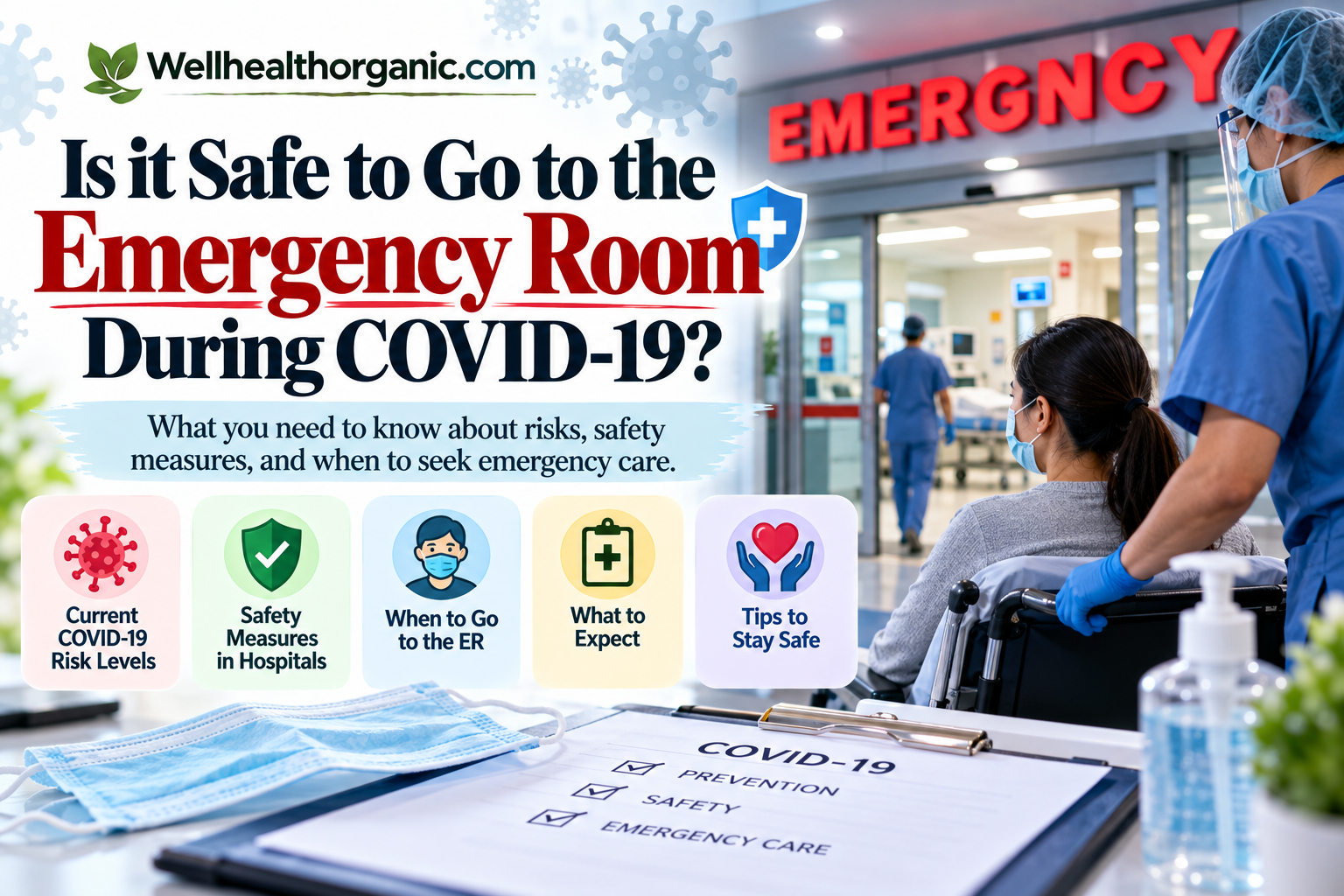
If you are experiencing a medical emergency, concerns about COVID-19 should not prevent you from seeking necessary emergency care. Emergency departments are designed to evaluate and treat serious and potentially life-threatening conditions, including when respiratory viruses such as COVID-19 are circulating.
The COVID-19 pandemic changed how healthcare facilities approach infection prevention. Hospitals may use measures such as patient screening, masks or other personal protective equipment when appropriate, improved ventilation, isolation precautions, hand hygiene, and procedures for managing patients with respiratory infections.
Specific policies now vary considerably between hospitals and can change according to local respiratory-virus activity. However, the most important principle remains the same: do not delay emergency medical treatment because you are afraid of being exposed to COVID-19.
Should You Go to the Emergency Room During COVID-19?
Yes, if you have symptoms of a medical emergency.
The potential consequences of delaying treatment for conditions such as a heart attack, stroke, severe breathing difficulty, major injury, or uncontrolled bleeding can be much more serious than the potential risk of COVID-19 exposure in a healthcare facility.
If the situation appears life-threatening, contact your local emergency medical service or go to the nearest appropriate emergency department.
When Should You Go to the Emergency Room?
Emergency departments are intended for serious conditions that require immediate evaluation or treatment.
Examples of symptoms or situations that may require emergency medical attention include:
- Severe difficulty breathing
- Persistent or severe chest pain or pressure
- Signs of a stroke
- Loss of consciousness
- New severe confusion
- Seizures
- Severe allergic reactions
- Uncontrolled or severe bleeding
- Major injuries
- Severe burns
- Suspected poisoning or overdose
- Severe abdominal pain
- Serious pregnancy-related symptoms
- Thoughts or actions involving suicide or serious self-harm
This is not a complete list. If symptoms appear severe, rapidly worsen, or seem life-threatening, seek emergency medical assistance.
Why You Should Not Delay Emergency Care
Time can be critical during many medical emergencies.
Some conditions require treatment within a limited period to reduce the risk of permanent injury, disability, complications, or death.
Examples include heart attacks and strokes.
Delaying emergency care because of fear of COVID-19 can therefore create a separate and potentially more serious health risk.
Heart Attack Symptoms Require Immediate Attention
A heart attack is a medical emergency.
Possible warning signs can include:
- Chest pressure, squeezing, fullness, discomfort, or pain
- Pain or discomfort spreading to the arm, shoulder, back, neck, jaw, or stomach
- Shortness of breath
- Cold sweat
- Nausea
- Lightheadedness
Heart attack symptoms do not always look the same in every person.
Do not wait for symptoms to become unbearable before seeking emergency help if you suspect a heart attack.
Know the Warning Signs of Stroke
Stroke also requires immediate medical treatment.
Warning signs can include sudden:
- Facial weakness or drooping
- Arm or leg weakness or numbness
- Difficulty speaking or understanding speech
- Vision problems
- Difficulty walking or loss of balance
- Severe unexplained headache
If you suspect a stroke, contact emergency medical services immediately.
Do not delay treatment while waiting to see whether the symptoms disappear.
Can You Go to the ER if You Have COVID-19?
Yes. Having COVID-19 does not prevent you from receiving emergency medical care.
If you have COVID-19 and develop severe or concerning symptoms, emergency evaluation may be necessary.
If practical, tell emergency personnel or hospital staff that you have tested positive or believe you may have COVID-19 so appropriate infection-control precautions can be considered.
When Is COVID-19 Itself an Emergency?
Most people with COVID-19 do not require emergency hospital treatment, but severe illness can occur.
Seek emergency medical care for serious warning signs such as:
- Difficulty breathing
- Persistent chest pain or pressure
- New confusion
- Difficulty waking or staying awake
- Blue, gray, or unusually pale lips, skin, or nail beds
- Other severe or rapidly worsening symptoms
This is not a complete list of possible emergency symptoms. Seek urgent help whenever a person’s condition appears life-threatening.
How Emergency Rooms Reduce Infection Risks
Healthcare facilities use infection-prevention procedures designed to reduce transmission of respiratory and other infectious diseases.
The exact precautions used by an emergency department can depend on the facility, patient’s symptoms, local policies, and current levels of respiratory illness.
Measures may include:
- Triage and symptom assessment
- Personal protective equipment
- Isolation precautions when appropriate
- Hand hygiene
- Cleaning and disinfection
- Ventilation and air-quality measures
- Respiratory hygiene
- Masking in certain situations
Triage in the Emergency Room
Emergency departments generally use triage to determine which patients require the most urgent medical attention.
This means patients are not necessarily treated in the order they arrive.
A patient with a potentially life-threatening condition may receive immediate attention, while someone with a less urgent problem may need to wait.
During triage, staff may ask about symptoms, medical history, medications, allergies, and recent infectious-disease symptoms or exposures when relevant.
Are COVID-19 Patients Separated From Other Patients?
Hospitals may use isolation precautions for patients with suspected or confirmed respiratory infections when clinically appropriate.
However, procedures differ between facilities.
The widespread dedicated COVID-19 areas used during earlier phases of the pandemic are not necessarily maintained in the same form at every hospital today.
Healthcare facilities adapt infection-control measures according to current conditions and patient needs.
Do You Have to Wear a Mask in the Emergency Room?
Mask policies vary by hospital and can change depending on respiratory-virus activity, patient population, facility policy, and local public-health recommendations.
Some healthcare facilities may require masks in particular areas or situations, while others may make them optional for many visitors.
If you have respiratory symptoms or recently tested positive for COVID-19, wearing a well-fitting mask when you are around other people can help reduce the spread of infectious respiratory particles.
Follow the instructions provided by the healthcare facility.
Can You Wear Your Own Mask to the ER?
In many situations, you can arrive wearing your own well-fitting mask.
However, hospital staff may ask you to replace it with a facility-provided mask or respirator depending on the situation and hospital policy.
Follow the instructions of healthcare personnel once you arrive.
Personal Protective Equipment in Hospitals
Healthcare workers may use personal protective equipment based on the infection risk associated with a particular patient or procedure.
PPE can include:
- Medical masks
- Respirators
- Gloves
- Gowns
- Eye protection
The type of protection required depends on the clinical situation.
Cleaning and Disinfection in Emergency Departments
Hospitals maintain cleaning and infection-control procedures for patient-care environments.
Frequently touched surfaces, patient-care equipment, examination areas, and other parts of the healthcare environment may be cleaned according to facility protocols.
However, COVID-19 primarily spreads through infectious respiratory particles, so measures addressing respiratory exposure and indoor air are also important.
Ventilation and COVID-19 Prevention
Indoor air quality is an important component of respiratory infection prevention.
Healthcare facilities may use ventilation, filtration, airflow management, and other engineering controls as part of their infection-control strategies.
Specific systems vary considerably between hospitals and individual areas of a facility.
Is It Possible to Catch COVID-19 at a Hospital?
No public indoor environment can guarantee zero risk of exposure to respiratory viruses.
Healthcare facilities can contain patients with COVID-19, influenza, RSV, and other infectious illnesses.
However, hospitals also use infection-control procedures specifically because they routinely care for people with infectious diseases.
When you have a genuine medical emergency, the potential harm caused by avoiding or delaying necessary treatment can outweigh the infection risk associated with seeking care.
How Can You Reduce Your Risk at the Emergency Room?
If you are medically able to do so without delaying emergency treatment, several simple precautions may reduce respiratory-virus exposure.
- Consider wearing a well-fitting, high-quality mask or respirator.
- Clean your hands appropriately.
- Avoid touching your face unnecessarily.
- Follow instructions from hospital staff.
- Tell staff if you have respiratory symptoms or recently tested positive for COVID-19.
- Keep reasonable distance from visibly ill people when practical.
These precautions should never delay treatment for a serious medical emergency.
Should You Call the Hospital Before Going?
If you have a life-threatening emergency, do not delay care simply to contact the hospital first.
Call your local emergency medical service when appropriate.
For a non-life-threatening problem where you are uncertain whether emergency treatment is necessary, you may be able to contact a healthcare professional, urgent-care service, nurse advice service, or telehealth provider for guidance.
Emergency Room vs. Urgent Care
Emergency rooms and urgent-care centers serve different purposes.
An emergency department is generally appropriate for serious, potentially life-threatening, or rapidly worsening conditions.
Urgent care may be appropriate for medical problems that need prompt attention but are not expected to be life-threatening.
Examples may include certain minor injuries, mild infections, uncomplicated respiratory symptoms, or other non-emergency conditions.
Available services differ between urgent-care facilities.
Emergency Room vs. Telemedicine
Telemedicine can be useful for discussing some non-emergency symptoms, follow-up questions, minor illnesses, and whether an in-person evaluation may be needed.
However, telemedicine cannot replace emergency treatment for a potentially life-threatening condition.
Do not wait for a virtual appointment if you have severe chest pain, major breathing difficulty, stroke symptoms, uncontrolled bleeding, loss of consciousness, or another obvious emergency.
What Should You Bring to the Emergency Room?
If doing so will not delay urgent care, useful information or items can include:
- Identification
- Insurance information when applicable
- A current medication list
- Known allergies
- Relevant medical information
- Emergency contact information
- A well-fitting mask if you choose to wear one
Do not spend time gathering documents if immediate medical treatment is necessary.
Tell Staff About Your Medications
Medication information can be particularly important during emergency treatment.
If possible, provide a list that includes:
- Prescription medications
- Over-the-counter medications
- Vitamins
- Herbal products
- Dietary supplements
- Known medication allergies
If you cannot provide this information during a serious emergency, treatment should not be delayed.
Should Someone Come With You?
Visitor policies vary between hospitals.
Some emergency departments allow a support person in many circumstances, while others may restrict visitors because of infection-control requirements, space, patient privacy, or clinical needs.
Children, older adults, people with disabilities, and patients who need communication assistance may have additional support considerations.
What If You Are at Higher Risk From COVID-19?
People at increased risk of severe respiratory illness may reasonably be more concerned about visiting healthcare environments.
If you are medically stable and the condition is not an emergency, you can discuss appropriate care options with a healthcare professional.
But if you are experiencing an emergency, being at higher risk from COVID-19 is not a reason to delay necessary emergency treatment.
Older Adults and Emergency Care
Older adults have a greater risk of severe outcomes from many medical conditions, including COVID-19.
They may also experience less typical symptoms during emergencies.
Sudden confusion, significant weakness, falls, breathing difficulty, severe pain, or major changes in behavior or function may require prompt medical assessment.
Emergency Care for Children
Children can also develop medical emergencies requiring immediate treatment.
Seek urgent medical attention for concerning symptoms such as severe breathing difficulty, unresponsiveness, seizures, serious injury, severe dehydration, or other signs of severe illness.
Parents and caregivers should not delay emergency treatment because of concerns about respiratory-virus exposure.
Pregnancy and Emergency Care
Pregnancy-related emergencies also require prompt assessment.
Potentially serious symptoms can include heavy bleeding, severe abdominal pain, seizures, severe headache with concerning associated symptoms, breathing difficulty, chest pain, or other significant changes.
Pregnant individuals should follow instructions from their maternity-care team when available, but suspected emergencies require immediate medical attention.
What If You Recently Tested Positive for COVID-19?
If you recently tested positive and need emergency treatment, seek care.
If possible, tell emergency medical personnel and hospital staff about the positive result.
This information can help healthcare workers make appropriate decisions about testing, treatment, room placement, and infection-control precautions.
Do Not Drive Yourself During Certain Emergencies
Depending on the emergency, driving yourself to the hospital can be dangerous.
For example, severe chest pain, stroke symptoms, significant breathing difficulty, loss of consciousness, or severe weakness can impair your ability to drive safely.
Emergency medical services can also begin assessment and treatment before arrival at the hospital in many situations.
What If the Emergency Room Is Crowded?
Emergency departments can become crowded during periods of high demand.
Do not leave simply because other patients appear to have been treated before you.
Triage prioritizes patients according to medical urgency rather than arrival order.
If your symptoms worsen while waiting, tell emergency department staff immediately.
Should You Avoid the ER for Minor Illness?
Emergency departments should generally be reserved for conditions requiring emergency-level evaluation or treatment.
For mild or non-emergency symptoms, alternatives may include:
- A primary-care provider
- An urgent-care clinic
- A telehealth service
- A pharmacist for appropriate medication-related questions
Using the appropriate level of care can reduce unnecessary waiting and help emergency departments focus resources on critically ill patients.
What If You Are Unsure Whether It Is an Emergency?
It is not always easy to determine how serious a symptom is.
If the condition appears life-threatening, rapidly worsening, or severe, seek emergency medical care.
If symptoms are less severe and you are uncertain about the appropriate level of care, contact an appropriate healthcare professional or medical advice service when available.
Do not rely exclusively on online symptom checkers to rule out a potentially serious medical condition.
Are Emergency Rooms Safe During Flu and RSV Season?
The same general principles apply when influenza, RSV, COVID-19, and other respiratory viruses are circulating.
Hospitals routinely care for patients with infectious respiratory illnesses and use infection-control procedures appropriate to their facilities.
If you have a genuine emergency, seasonal respiratory-virus activity should not prevent you from seeking necessary care.
COVID-19 Has Changed, but Emergency Care Is Still Essential
The emergency-room environment today is different from the earliest stages of the COVID-19 pandemic.
Policies such as universal masking, entrance screening, physical distancing, visitor restrictions, and dedicated COVID-19 areas may no longer be routinely used by every hospital.
Instead, healthcare facilities may adjust infection-control measures based on current respiratory-virus activity, individual patient circumstances, and local policies.
For patients, the key message has not changed: potentially serious medical conditions require timely evaluation.
How to Stay Informed
Respiratory-virus recommendations and healthcare policies can change.
For current information, consult:
- Your healthcare provider
- Your local hospital or health system
- Your local or national public-health authority
- Trusted international public-health organizations
For hospital-specific questions such as masking requirements or visitor policies, the hospital itself is generally the most appropriate source because policies can differ between facilities.
Is It Safe to Go to the Emergency Room During COVID-19? The Bottom Line
If you are experiencing a medical emergency, go to the emergency room or contact emergency medical services.
Healthcare facilities use infection-prevention procedures to reduce the spread of COVID-19 and other infectious diseases, although specific measures vary between hospitals.
No healthcare setting can guarantee zero exposure risk. However, delaying necessary emergency care can have serious consequences.
Do not allow fear of COVID-19 to prevent you from seeking treatment for a potentially life-threatening condition.
Conclusion
So, is it safe to go to the emergency room during COVID-19? If you have a medical emergency, seeking emergency care is the appropriate action.
Hospitals have infection-control procedures for managing patients with COVID-19 and other contagious illnesses. Depending on current conditions and hospital policy, these measures can include respiratory precautions, personal protective equipment, isolation procedures, cleaning, hand hygiene, masking, ventilation, and other strategies.
Policies have evolved since the early pandemic, so you should not assume that every hospital currently requires universal masking, physical distancing, COVID-19 screening, or other measures that were common in 2020 and 2021.
Most importantly, symptoms of a heart attack, stroke, severe breathing problem, major injury, severe bleeding, or another medical emergency require prompt attention. The potential consequences of delaying emergency treatment can be severe.
Frequently Asked Questions
Is it safe to visit the emergency room if COVID-19 is spreading?
If you have a medical emergency, you should seek emergency care. Hospitals use infection-control measures to reduce infectious-disease transmission, although no indoor healthcare environment can guarantee zero exposure risk.
Should I avoid the hospital because I might catch COVID-19?
Fear of COVID-19 should not cause you to delay necessary emergency treatment. For a genuine medical emergency, the risks associated with delaying care can be considerably more serious.
Can I go to the ER if I currently have COVID-19?
Yes. If you have COVID-19 and develop severe or concerning symptoms, seek emergency medical attention. Tell healthcare personnel that you have tested positive when possible.
What COVID-19 symptoms require emergency treatment?
Severe difficulty breathing, persistent chest pain or pressure, new confusion, inability to stay awake, and other severe or rapidly worsening symptoms can require emergency care.
Should I wear a mask in the emergency room?
Hospital policies vary. Wearing a well-fitting mask can help reduce respiratory-virus transmission, particularly if you have respiratory symptoms or recently tested positive. Follow the facility’s current instructions.
Do hospitals still require masks?
Not universally. Masking policies vary by hospital and may change according to respiratory-virus activity, local requirements, and patient-care circumstances.
Are COVID-19 patients separated in emergency rooms?
Hospitals may use isolation or other precautions for patients with suspected or confirmed respiratory infections when appropriate. Exact procedures vary between facilities.
Can I catch COVID-19 in an emergency room?
Exposure is possible in any indoor environment where infected people are present. Hospitals use infection-control procedures to reduce this risk, but no facility can promise zero risk.
Should I call the ER before arriving?
For a life-threatening emergency, do not delay treatment just to call the hospital. Contact emergency medical services when appropriate. For non-emergency symptoms, contacting a healthcare professional first may help determine the appropriate level of care.
Should I go to urgent care instead of the emergency room?
Urgent care can be appropriate for some non-life-threatening conditions. Potentially life-threatening symptoms such as severe chest pain, major breathing difficulty, stroke symptoms, uncontrolled bleeding, or serious injuries generally require emergency-level care.
Can telemedicine replace an ER visit?
No. Telemedicine can be useful for many non-emergency concerns but should not replace immediate emergency treatment for a potentially life-threatening condition.
What should I do if I think I’m having a heart attack?
Seek emergency medical assistance immediately. Do not wait for the symptoms to disappear or delay treatment because of concerns about COVID-19 exposure.
What should I do if I notice stroke symptoms?
Contact emergency medical services immediately. Stroke treatment can be highly time-sensitive.
Is the emergency room safe for older adults?
Older adults may be more vulnerable to both infectious diseases and complications from delayed emergency treatment. If an older person has a medical emergency, seek appropriate emergency care and use reasonable respiratory precautions when possible.
Can children go to the ER during COVID-19?
Yes. Children with severe or potentially life-threatening symptoms should receive emergency medical evaluation regardless of COVID-19 concerns.
Should pregnant women avoid emergency rooms because of COVID-19?
No. Potential pregnancy-related emergencies require prompt medical attention. Follow guidance from the maternity-care team when available, but do not delay emergency treatment for severe symptoms.
What if my COVID-19 test is positive but I need emergency treatment for something else?
Seek emergency care. Tell healthcare personnel about the positive test so they can use appropriate precautions while treating the medical problem.
Can I bring someone with me to the emergency room?
Visitor and support-person policies vary by hospital. Check the facility’s current policy when practical, but do not delay emergency care because you are uncertain about visitor rules.
What if my symptoms get worse while I am waiting in the ER?
Tell emergency department staff immediately if your condition changes or worsens while you are waiting.
Is it better to stay home if my condition is not an emergency?
If your symptoms are mild or non-emergency, primary care, urgent care, telemedicine, or another appropriate healthcare service may be more suitable. If symptoms become severe or life-threatening, seek emergency care.
Disclaimer
This article is provided for general informational and educational purposes only. It is not a substitute for professional medical advice, diagnosis, or emergency treatment. COVID-19 recommendations, hospital infection-control procedures, masking policies, and visitor requirements can change and vary by location and healthcare facility. If you believe you or another person is experiencing a medical emergency, contact your local emergency medical service or seek immediate emergency medical care.